Water Tank Cleaning in Malviya Nagar: Resident’s Guide
Water tank cleaning in Malviya Nagar South Delhi costs ₹800, ₹2,000. Learn when to clean, what to inspect, and how to verify the job was done right.
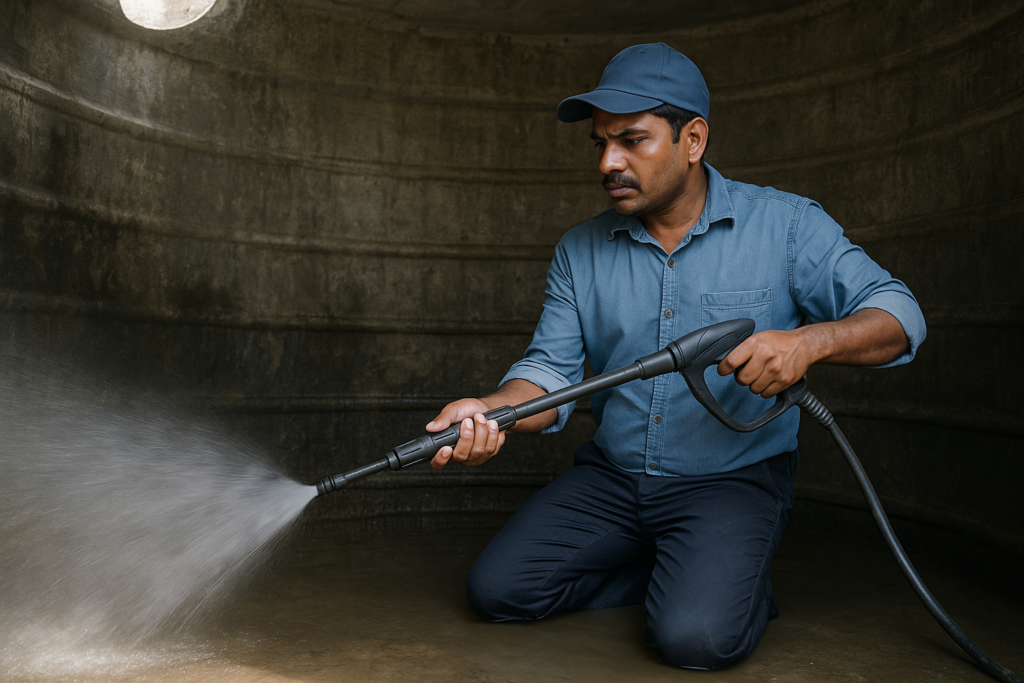
Water tank cleaning in South Delhi’s Malviya Nagar costs between ₹800 and ₹2,000 for a standard overhead tank. But here’s what residents actually miss: when to call, what to check before paying, and how to verify the job was done right. This guide covers all three.
Why Malviya Nagar tanks need more frequent cleaning
Malviya Nagar receives water from Delhi Jal Board through a mixed supply: piped treated water and, in many blocks, supplementary groundwater via borewells. South Delhi groundwater carries elevated iron and hardness levels. Hard water leaves calcium scale on tank walls and float valves. Iron-rich water speeds up biofilm formation (a slimy bacterial layer) on the floor and sidewalls of both overhead and underground tanks.
The practical consequence: tanks in Malviya Nagar accumulate sediment and biofilm faster than tanks in softer water areas. A tank needing cleaning once yearly in Dwarka might need it every six months here, especially in DDA flats and older independent houses with aging supply pipes.
Overhead tank cleaning in Delhi: ₹800 to ₹2,000 for a standard residential tank. Underground sump cleaning typically costs more due to confined-space access requirements.
Seasonal cleaning calendar for South Delhi
Timing matters more than most residents realise. Here’s a practical schedule for Malviya Nagar:
- June (pre-monsoon): Clear summer silt buildup before rains add contaminants. Tanks low on water through May concentrate sediment at the bottom.
- July/August (mid-monsoon): Runoff increases algae and particulate contamination entering overhead tanks with poor lids or cracked walls. Inspect now; clean if discoloration appears.
- October/November (post-monsoon): Algae bloom residue settles once rains stop. This is the ideal time for thorough chemical cleaning before winter.
- February/March: Light inspection cycle. Iron staining on outlet pipes signals a mid-year clean is overdue.
Self-inspection checklist before calling anyone
Don’t book a service until you’ve checked these five things yourself. It takes ten minutes.
- Colour at the tap: Run cold water into a clear glass. Brownish or yellowish tint points to iron sediment or rust from aging pipes. Greyish water often signals biofilm disturbance.
- Smell: Musty or earthy odour is algae. Sewage-like smell indicates bacterial growth. No smell but visible particles means sediment only.
- Tank lid condition: A cracked or improperly seated lid on an overhead tank is the single most common contamination entry point in Malviya Nagar’s rooftop tanks. Check this first.
- Float valve: A stuck float valve causes overflow, which dilutes sediment but also allows airborne debris in. Test it by hand.
- Visual inside the tank (use a torch): Black or green patches on walls are biofilm or algae. A thick grey layer on the floor is silt. Both need cleaning; algae and biofilm need chemical treatment on top of scrubbing.
This inspection also protects you from paying for a full chemical treatment when simple scrubbing and a rinse would do. For a deeper look at how building type changes what you need, see this guide to water tank cleaning costs and methods in Malviya Nagar.
Cost breakdown by service type
| Service | Approximate Cost (INR) | When You Need It |
|---|---|---|
| Overhead tank basic clean (scrub + rinse) | ₹800, ₹1,200 | Sediment only, no smell |
| Overhead tank + chemical disinfection | ₹1,200, ₹2,000 | Algae, biofilm, or musty smell |
| Underground sump cleaning | ₹1,500, ₹3,000+ | Confined space, larger volume |
| Biofilm removal (scrub + treatment) | Add ₹300, ₹600 | Slimy walls confirmed visually |
| Motor cavity clearing | Add ₹200, ₹400 | Motor losing prime frequently |
| Waste water disposal (off-site) | Add ₹200, ₹500 | Society rules prohibit drain discharge |
A base quote of ₹800 doesn’t include chemical treatment, biofilm removal, or proper waste disposal. Know what’s bundled before you agree.
Housing type matters in Malviya Nagar
Malviya Nagar is mixed housing: DDA flats, independent builder floors, and newer society buildings. Each setup requires different approaches.
- DDA flats: Typically overhead RCC (reinforced concrete) tanks on rooftops. Older tanks often have hairline cracks allowing contamination. Manual scrubbing is standard; non-invasive cleaning works here if the tank has good access points.
- Independent houses and builder floors: Often have both an underground sump and a rooftop tank. The sump is brick-lined or concrete and needs confined-space cleaning protocols. Confirm the cleaner has the right equipment.
- Society buildings: Common shared tanks. Get written confirmation of the cleaning schedule from your RWA. Ask for a job completion report with before and after photos.
Residents comparing options can also check this breakdown of tank cleaning costs and protocols in Dwarka to see how pricing and building types compare across South Delhi zones.
Red flags to watch for when hiring
- No PPE (gloves, mask, boots) on arrival. Inside a tank is a confined space with bacterial risk.
- Draining waste water directly into the society compound or stairwell drain without permission. This violates local bye-laws.
- No before and after photos provided. Any reputable operator documents the job.
- Refuses to show service record or prior client references in Malviya Nagar specifically.
- Quote changes after they open the tank lid. Agree on what triggers an add-on charge before work starts.
Post-cleaning verification
After cleaning, refill the tank and run water at the tap. Clear within a minute of flushing is the baseline. A simple turbidity check: fill a 500ml clear bottle and hold it to daylight. You should be able to read text through it. If not, sediment wasn’t fully removed.
For formal verification, ask the cleaner for a completion report with photos of the clean tank interior, the chemical used (if any), and batch or concentration details. Some South Delhi operators offer a basic lab water test as an add-on for ₹300 to ₹500. Worth it for underground sumps or any tank where biofilm was confirmed. Pest contamination in tanks is also common after monsoon; residents with recurring tank issues can cross-check with a South Delhi pest control schedule to rule out entry points.
Frequently Asked Questions
How much does it cost to clean a water tank in Delhi?
Overhead tank cleaning in Delhi costs approximately ₹800 to ₹2,000 for a standard residential tank. Underground sumps cost more due to access difficulty and larger volumes. Add-ons like biofilm chemical treatment or off-site waste disposal add ₹200 to ₹600 to the base price.
How much does it cost to clean out a water tank?
For a typical Malviya Nagar overhead RCC tank, expect ₹800 to ₹1,200 for a basic scrub and rinse, and ₹1,200 to ₹2,000 if algae or biofilm requires chemical disinfection. Underground sumps start at ₹1,500 and can go higher for brick-lined or deeper tanks.
Who should clean a water tank?
A professional with confined-space experience, proper PPE, and knowledge of food-safe disinfectants. In Malviya Nagar, look for operators who provide before and after photos, a written completion report, and references in the local area. Avoid anyone who won’t discuss their waste-water disposal method upfront.
What is the best way to clean a water tank?
For most residential tanks in Malviya Nagar: drain completely, scrub all interior surfaces with stiff brushes, apply a food-grade chlorine or hydrogen peroxide solution to kill biofilm and bacteria, rinse thoroughly, and refill. Non-invasive cleaning (pressurised without full draining) works for tanks with limited access points but is less thorough for tanks with confirmed silt buildup.
The residents who get the best results from tank cleaning in Malviya Nagar are the ones who inspect first, know what level of service they actually need, and verify the outcome. Base cleaning at ₹800 is fine for a tank with sediment only. If you found algae or biofilm, pay for chemical treatment and confirm it worked before the technician leaves.