Electrician in Central Delhi: 2026 Prices & How to Hire Right
Real 2026 electrician prices for Central Delhi, a vetting checklist, neighbourhood response times, and a pricing table for 10+ common jobs.
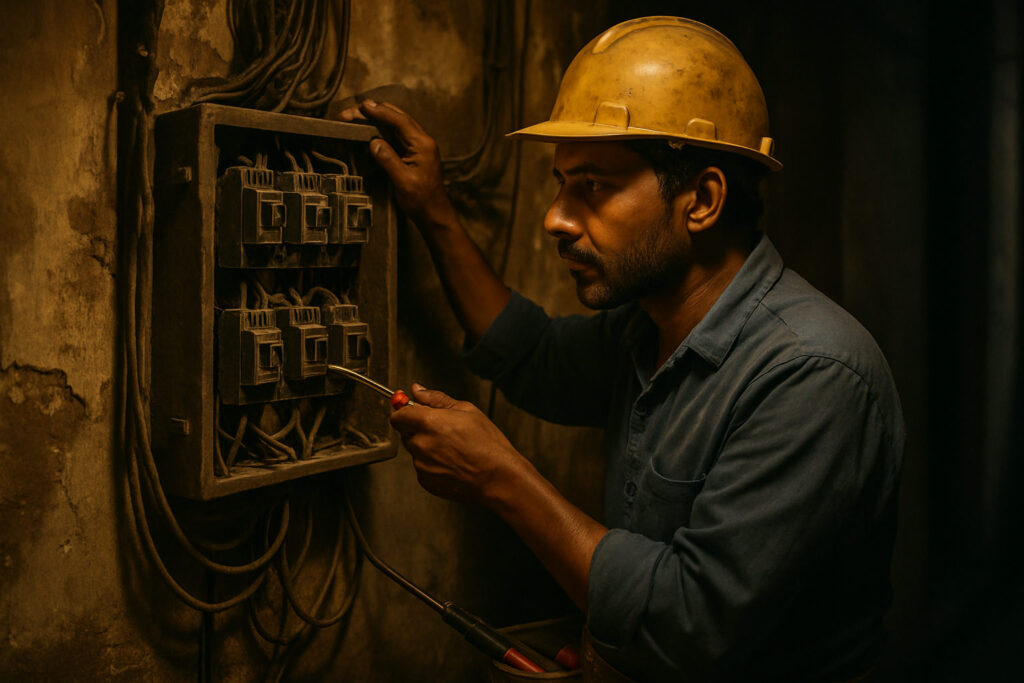
Finding a reliable electrician in Central Delhi means knowing what fair pricing looks like, how to vet credentials in an unregulated market, and which jobs you should absolutely never hand to an unlicensed handyman. This guide covers real 2026 pricing, a vetting checklist, and a neighbourhood-level view of the Central Delhi market so you hire right the first time.
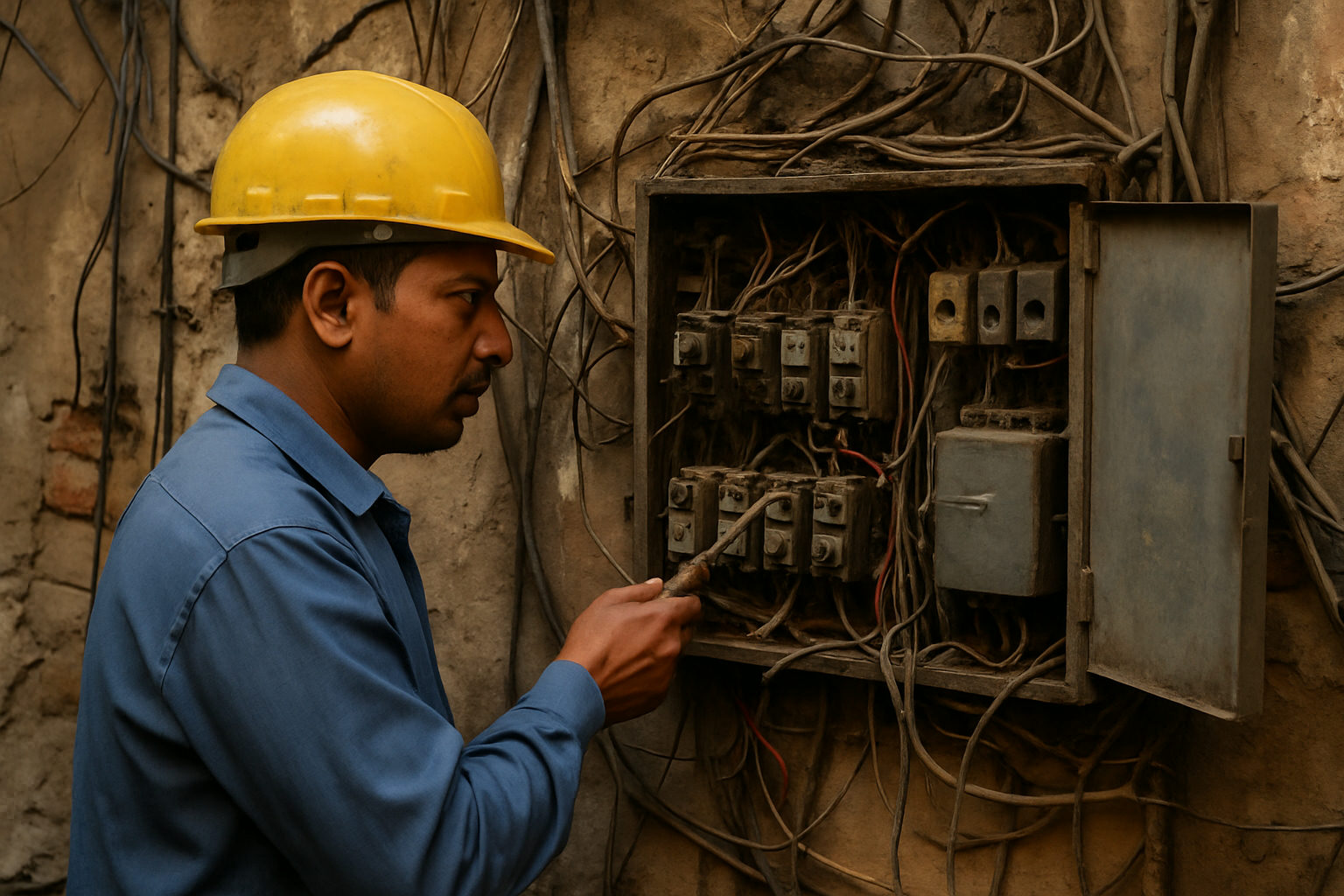
Why Central Delhi properties have specific electrical risks
Central Delhi covers Chandni Chowk, Connaught Place, Karol Bagh, Paharganj, Daryaganj, ITO, and Kasturba Nagar. Here’s the catch: a huge chunk of residential buildings went up before 1990. They’re still running on single-phase wiring designed for one fan and one bulb per room, not five ACs and a modern kitchen that pulls serious load.
What goes wrong. Undersized mains cables. Missing earth leakage circuit breakers (ELCBs). Aluminium wiring that’s oxidised at every joint. Then monsoon season hits (July through September) and water seeps into old conduit. That’s the leading cause of electrical fires in this part of Delhi. Any electrician you hire should test earthing continuity before they leave your flat.
Per 2026 market data, electrician charges in India range from ₹150 to ₹2,500+ per point depending on work type and whether materials are included.
2026 pricing table: what jobs actually cost in Central Delhi
The table below reflects current Delhi market rates. Prices shift based on building age, material quality, and whether the electrician supplies parts.
| Job | Labour only (₹) | Labour + materials (₹) |
|---|---|---|
| Switch or socket replacement (per point) | 150–250 | 300–600 |
| New outlet installation | 300–500 | 700–1,200 |
| Ceiling fan fitting | 300–500 | 600–1,000 |
| MCB/ELCB replacement | 400–700 | 800–1,500 |
| Full room rewiring (one room) | 1,800–3,500 | 3,500–7,000 |
| Full house rewiring (2BHK) | 8,000–15,000 | 18,000–35,000 |
| AC installation (split unit) | 1,200–1,800 | Varies |
| Geyser installation | 500–900 | 900–1,800 |
| Emergency call-out (daytime) | 500–800 flat fee | +parts |
| After-hours/midnight call-out | 1,000–1,500 flat fee | +parts |
These ranges are specific to Central Delhi. Work in other parts of Delhi runs 10-15% cheaper outside the congested inner city, where parking and lane access don’t eat into every job’s timeline.
Licensed electrician vs. local handyman vs. DIY
Not every repair needs a licensed contractor. But get this wrong and you’re voiding insurance plus creating real liability.
When to hire a licensed electrician
- Any work touching your main distribution board or MCB panel
- New circuit installation or rewiring an entire home
- ELCB/RCCB fitting (this is earth leakage protection, not optional)
- Bathrooms, kitchens, outdoor areas, anywhere monsoon-exposed
- Commercial work that requires a completion certificate
When a skilled handyman is acceptable
- Swapping a switch or socket like-for-like on existing wiring
- Hanging a ceiling fan on an existing hook and wiring point
- Replacing a fused plug or extension cord
DIY safety boundary
- Changing a fuse in a plug. That’s fine.
- Anything involving your building’s distribution board, conduit, or earthing. Don’t attempt it.
How to vet an electrician in Central Delhi
Delhi’s electrical services market doesn’t have mandatory state licensing at the contractor level like the UK or US models do. You’re holding the verification burden.
- Ask for an ITI certificate. A legitimate electrician holds an Industrial Training Institute (ITI) certificate in Electrician trade. Two years to earn it. Covers wiring theory, safety, code compliance. Ask to see it. Most unqualified operators won’t have one.
- Check for DISCOM familiarity. Central Delhi runs on BSES Yamuna. A competent electrician knows their metering standards and load approval procedures. Ask: “Have you done work that required BSES sanction?” Blank stare? That tells you something.
- Confirm warranty terms in writing. Reputable electricians offer at minimum a 30-day workmanship warranty on labour. Get it as a WhatsApp message at minimum, a written receipt ideally. Don’t skip this step.
- Refuse vague quotes. “I’ll check and tell you” is not a quote. Get a per-point or per-job breakdown before any work starts. Surprise bills after the fact are the biggest complaint category on JustDial reviews for Delhi electricians.
- Red flag: buying materials on your behalf without receipts. Some operators mark up materials 40-60% and hide the purchase bill. Insist on original receipts for every component. Or buy materials yourself from Bhagirath Palace (the largest electrical wholesale market in Central Delhi).
Editor note: Bhagirath Palace, off Chandni Chowk, is where most Delhi electricians source their stock. You can price-check any component in 10 minutes if an electrician’s markup looks heavy.
Neighbourhood response times across Central Delhi
Congestion matters more than distance here. Karol Bagh and Chandni Chowk have the densest electrician presence but the slowest vehicle access. Expect 45-90 minutes daytime even when an electrician is nominally nearby. ITO and Kasturba Nagar fare better for access. Paharganj’s narrow lanes mean the technician often arrives on foot or by two-wheeler, which limits tool capacity on a first visit.
AC-surge season (April through June) and monsoon fault calls (July-September) spike demand hard. Book non-urgent jobs before 9am or after 6pm to dodge peak call windows and sometimes negotiate a lower rate. The same electrician charging ₹800 for an afternoon call-out in June might quote ₹500 for a morning slot in February. If AC work is on your radar, the guide on AC repair pricing in East Delhi shows how seasonal demand reshapes costs across the city.
Diagnose before you call: save the visit fee
A basic check before dialling tells you whether the fault lives inside your flat or in the building’s common supply.
- Tripping MCB: Switch off heavy appliances, reset the MCB, then add appliances one by one. If it trips on a specific appliance, that’s your problem, not your wiring.
- Dead socket: Check the MCB for that circuit first. Also check if it’s a switched socket and the switch is off. Obvious, but missed constantly.
- Flickering lights in the whole building: Usually a DISCOM supply issue or a loose neutral at the building mains. Report to BSES Yamuna on their app before calling a private electrician.
- Overheating switch plate: Switch off that circuit immediately. This warrants an urgent call, not a DIY fix.
Electricians in Pune and Bangalore report that roughly 30% of call-outs are for faults residents could have self-triaged at zero cost. For more on what typical electrician pricing looks like in comparable cities, the patterns stay similar across urban India.
Avoid overpaying for an electrician in Central Delhi by arriving at the conversation knowing the per-point rate, the call-out fee, and whether you need a licensed contractor or a handyman.
Frequently Asked Questions
What is the cost of electrician in Delhi?
In Central Delhi, labour-only rates run from ₹150–₹250 for a simple switch replacement up to ₹15,000 for full 2BHK rewiring labour. Emergency and after-hours call-outs carry a flat fee of ₹500–₹1,500 on top of job costs. Rates are 10-20% higher in congested inner-city areas like Chandni Chowk compared to outer Delhi.
What is the minimum charge for an electrician?
Most Central Delhi electricians charge a minimum visit fee of ₹300–₹500 for a daytime call, even if the actual repair takes under 15 minutes. This covers travel time through congested lanes. Some operators waive the visit fee if you book and the job exceeds ₹1,500 in total.
How much does an electrician charge in India?
Per 2026 market data, electrician charges in India range from ₹150 to ₹2,500+ per point depending on work type and whether materials are included. Metro cities like Delhi, Mumbai, and Bangalore sit at the higher end of that range. For a detailed city comparison, see our guide on electrician pricing in Bangalore.
Who is a famous electrician?
This is a common search query but doesn’t point to a single answer relevant to hiring decisions. For Central Delhi specifically, the most useful signal is a contractor with a verified Google Business Profile, 50+ reviews, and an ITI certificate. Name recognition alone doesn’t proxy for quality in an unregulated local market.
In closing
Central Delhi’s old building stock, monsoon hazards, and congested access make it one of the more demanding environments in India for electrical work. Know the per-point price before any job starts. Verify an ITI certificate. Insist on a written warranty. And buy materials from Bhagirath Palace if the markup looks wrong. Those four steps will save most residents from the two most common problems: overpaying and substandard work that fails six weeks later.