Pest Control in East Delhi: 2026 Prices & How to Choose Right
Pest control in East Delhi: 2026 prices from ₹800, seasonal pest calendar, treatment method comparison, pre-service checklist, and how to avoid hidden…
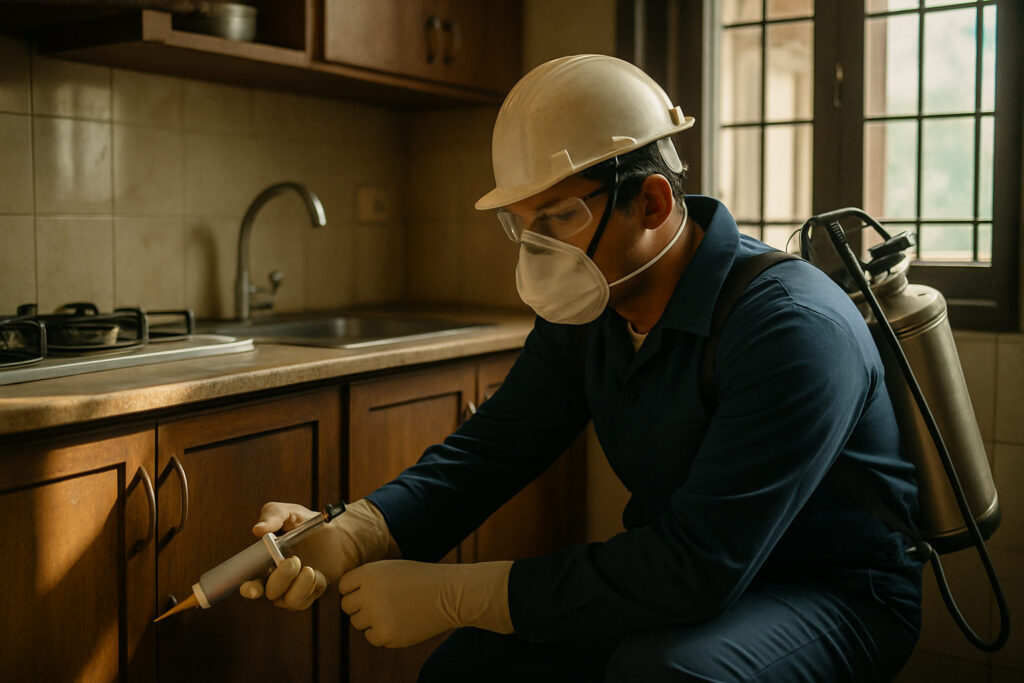
Pest control in East Delhi starts from ₹800 for a single-room cockroach treatment and runs to ₹8,000+ for whole-home termite management. But price is the last thing to compare. The real decisions are which pest you actually have, which treatment method is safe for your family, and whether the company you hire will come back if the problem returns.
In This Guide
- Identify Your Pest First
- East Delhi’s Seasonal Pest Calendar
- Treatment Methods Compared
- Before the Technician Arrives
- Real Costs and Hidden Fees
- Choosing the Right Service
- Frequently Asked Questions
Identify Your Pest Before You Call Anyone
Most East Delhi residents call a pest control service and say “I have pests.” That’s not enough. Here’s what to look for in housing around Shahdara, Preet Vihar, Laxmi Nagar, and Krishna Nagar.
- Cockroaches: Dark droppings the size of pepper flakes near the kitchen drain or behind the gas cylinder. A faint musty smell in cabinets. If you see one during the day, the infestation is already large.
- Termites: Hollow-sounding wooden door frames, thin mud tubes running up walls (especially in older DDA flats), or paint that bubbles from the inside without moisture damage.
- Bed bugs: Rusty spots on your mattress seams, tiny translucent shells, and bites in lines of three. Check the wooden slats of charpoys and the backside of headboards.
- Rodents: Gnaw marks on wiring or food packets, droppings along wall edges, and a sharp ammonia smell in storage rooms.
- Mosquitoes: Breeding sites rather than the mosquitoes themselves. Check cooler trays, flower pot bases, and any standing water on the roof.
Once you’ve identified the pest, describe it specifically when calling. Services like Ozone Pest Control (operating in Krishna Nagar) and national chains like Rentokil PCI with branches across Delhi will quote more accurately and recommend the right method. For broader Delhi context, see our guide on pest control in Delhi: 2026 prices and how to choose right.
East Delhi’s Seasonal Pest Calendar
Book preventive treatment 2-3 weeks before peak season, not during it. Reactive bookings cost more and take longer to work.
- June to September (Monsoon): Mosquitoes and houseflies surge. Waterlogging in low-lying parts of Patparganj and Mayur Vihar creates breeding grounds fast. Book mosquito fogging before July.
- October to February (Winter): Rodents move indoors seeking warmth. Ground-floor flats in Gandhi Nagar and Jhilmil Colony see the worst rodent pressure. Seal entry points before October.
- March to May (Summer): Termites swarm during the first rains and in the weeks just before. This is the highest-risk window for wooden furniture and door frames. Pre-monsoon termite treatment, booked in April, gives the chemical time to work before swarm season peaks.
Treatment Methods: Chemical vs. Organic vs. Heat
| Method | Best For | Safety | Cost Range | Re-entry Wait |
|---|---|---|---|---|
| Chemical spray | Cockroaches, ants, mosquitoes | Ventilate 2-4 hrs; keep children and pets out | ₹800-₹2,500 | 2-4 hours |
| Gel bait | Cockroaches (kitchens, electronics) | Low toxicity; safe around food areas after setting | ₹1,200-₹3,000 | None required |
| Termite anti-termite treatment (ATT) | Termites in walls/floors | Drill-and-inject; vacate for 4-6 hrs | ₹3,000-₹8,000+ | 4-6 hours |
| Organic/herbal spray | Mild infestations; homes with infants | Safest option; lower efficacy on heavy infestations | ₹1,500-₹3,500 | 30 minutes |
| Heat treatment | Bed bugs | No chemicals; safe immediately after | ₹4,000-₹10,000 | None |
For East Delhi’s older DDA housing stock with concrete slab construction, gel bait outperforms spray for cockroaches because it reaches inside wall voids where spray can’t penetrate. Heat treatment for bed bugs costs more but avoids the 2-week re-infestation risk that chemical spray carries if any eggs survive.
Pre-Service Checklist: What to Do Before the Technician Arrives
- Remove all food items from kitchen counters and store in sealed containers or the fridge.
- Take pets out of the home for at least 4 hours (fish tanks need to be covered and air pumps switched off during chemical treatments).
- Move elderly family members and children under 12 out for the re-entry period specified by the technician.
- Pull appliances away from walls so the technician can treat behind them.
- Tell the technician about any asthma or respiratory conditions before treatment begins so they can adjust the formulation.
- Get the technician’s warranty terms and re-treatment policy in writing before they start.
Post-treatment: Don’t mop floors for 48 hours after a chemical spray. The residue on skirting boards and floor edges is what kills the second wave of pests. Mopping removes it before it works.
Real Costs and the Hidden Fees to Watch For
The ₹800 starting price you’ll see on JustDial and getpestcontrol.in covers a single small room only. A 2BHK flat in Laxmi Nagar will cost ₹2,000-₹4,000 for cockroach treatment and ₹5,000-₹8,000 for termite control. That’s realistic. Ask these questions before confirming any booking.
- Is the follow-up visit included or charged separately?
- What’s the warranty period? (Reputable services offer 30-90 days with free re-treatment.)
- Are chemicals WHO-approved or BIS-certified?
- Is the company licensed under the Insecticides Act, 1968?
If a company can’t answer the last two questions, don’t hire them. Unlicensed operators use unregulated chemicals that are genuinely dangerous in enclosed apartments.
Local Operator vs. National Chain: Which Is Right for East Delhi?
National chains like Rentokil PCI and HiCare have trained technicians and documented processes. Rentokil PCI India covers Delhi with consistent service standards. But there’s a tradeoff: response time. For an emergency (a rat in the kitchen at 8pm), a local East Delhi operator like Ozone Pest Control in Krishna Nagar will reach you same-day. National chains often need 48-72 hours.
For annual termite contracts or whole-home treatment, the accountability and warranty terms of a national chain are worth the price premium. For reactive cockroach or mosquito jobs, a well-reviewed local operator with 50+ Google reviews is faster and often cheaper. Compare service types across the city with our guide to deep house cleaning in Delhi.
“A written warranty is worth more than a verbal guarantee. If a company won’t put the re-treatment policy on paper, that policy doesn’t exist.”
Frequently Asked Questions
How much does pest control cost in Delhi?
Pest control in Delhi starts from ₹800 for a single-room treatment (cockroaches, ants) and ranges to ₹8,000 or more for whole-home termite management. A standard 2BHK cockroach treatment in East Delhi costs ₹2,000-₹4,000. Termite treatment for a flat of the same size runs ₹5,000-₹8,000. These are market rates as of mid-2026 based on listings from getpestcontrol.in and local East Delhi operators.
How much does pest control charge?
Charges depend on three factors: the pest type, the property size, and whether a warranty is included. Gel bait treatment for cockroaches in a kitchen starts around ₹1,200. Full-home mosquito fogging typically costs ₹1,500-₹3,000. Bed bug heat treatment runs ₹4,000-₹10,000 depending on the number of rooms. Always confirm whether follow-up visits are included before paying.
Which company is best for pest control?
For East Delhi, it depends on your need. Rentokil PCI branches in India covering Delhi are best for documented termite contracts with clear warranty terms. Ozone Pest Control in Krishna Nagar is rated highly for fast same-day response on cockroach and mosquito jobs. HiCare has an established presence across Delhi with structured treatment plans. Check Google reviews (aim for 50+ reviews minimum) and confirm licensing under the Insecticides Act before booking any operator.
Which smell do termites hate?
Termites avoid the smell of clove oil, tea tree oil, and cedarwood. These act as mild deterrents for small surface infestations but don’t penetrate wall voids or soil where termite colonies live. They’re not a substitute for professional anti-termite treatment. Use them as a short-term barrier while waiting for a licensed technician, not as a standalone solution.
The pest control market in East Delhi has plenty of options across every price point. The residents who get the best outcomes are the ones who identify their specific pest before calling, book preventive treatments ahead of each season, and get warranty terms in writing. That prep takes 15 minutes and saves you from repeat bookings that cost more than the original job.