Water Tank Cleaning in Chennai: 2026 Prices & Verification Guide
Water tank cleaning in Chennai costs ₹779, ₹5,000. 2026 price list, tank-type cleaning frequency, and a post-service verification checklist Chennai…
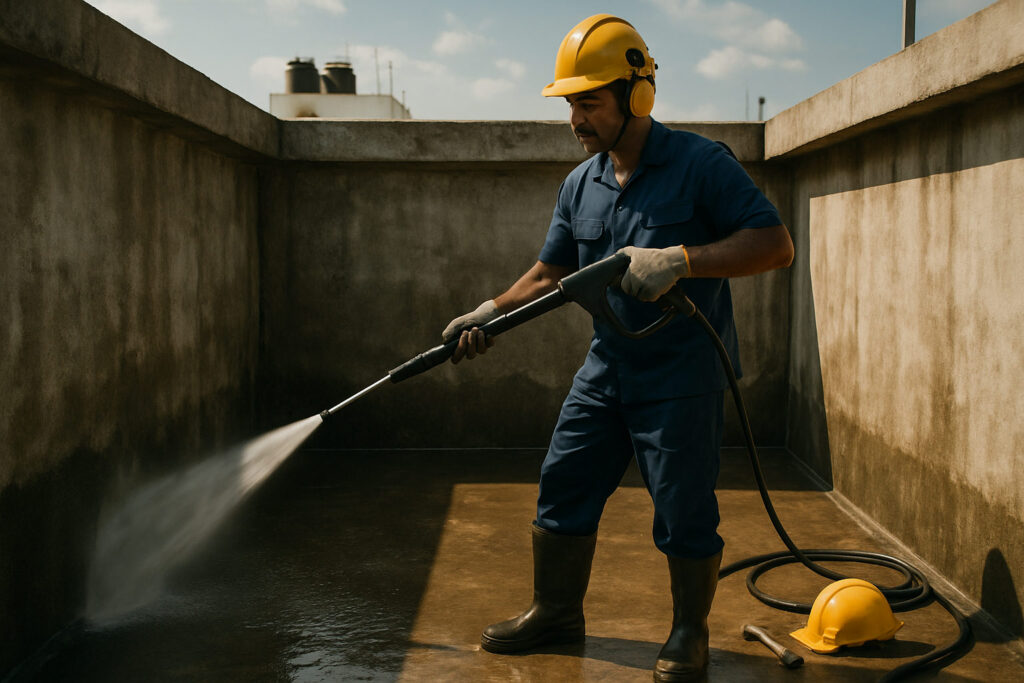
Water tank cleaning in Chennai runs ₹779 to ₹5,000. Overhead plastic tanks start at ₹779, underground sumps from ₹1,449, and large concrete overhead tanks from ₹1,199. But here’s what matters: how do you know if it actually worked? This guide covers real prices, why Chennai tanks get dirty so fast, and a practical checklist you can run yourself after the technician leaves.
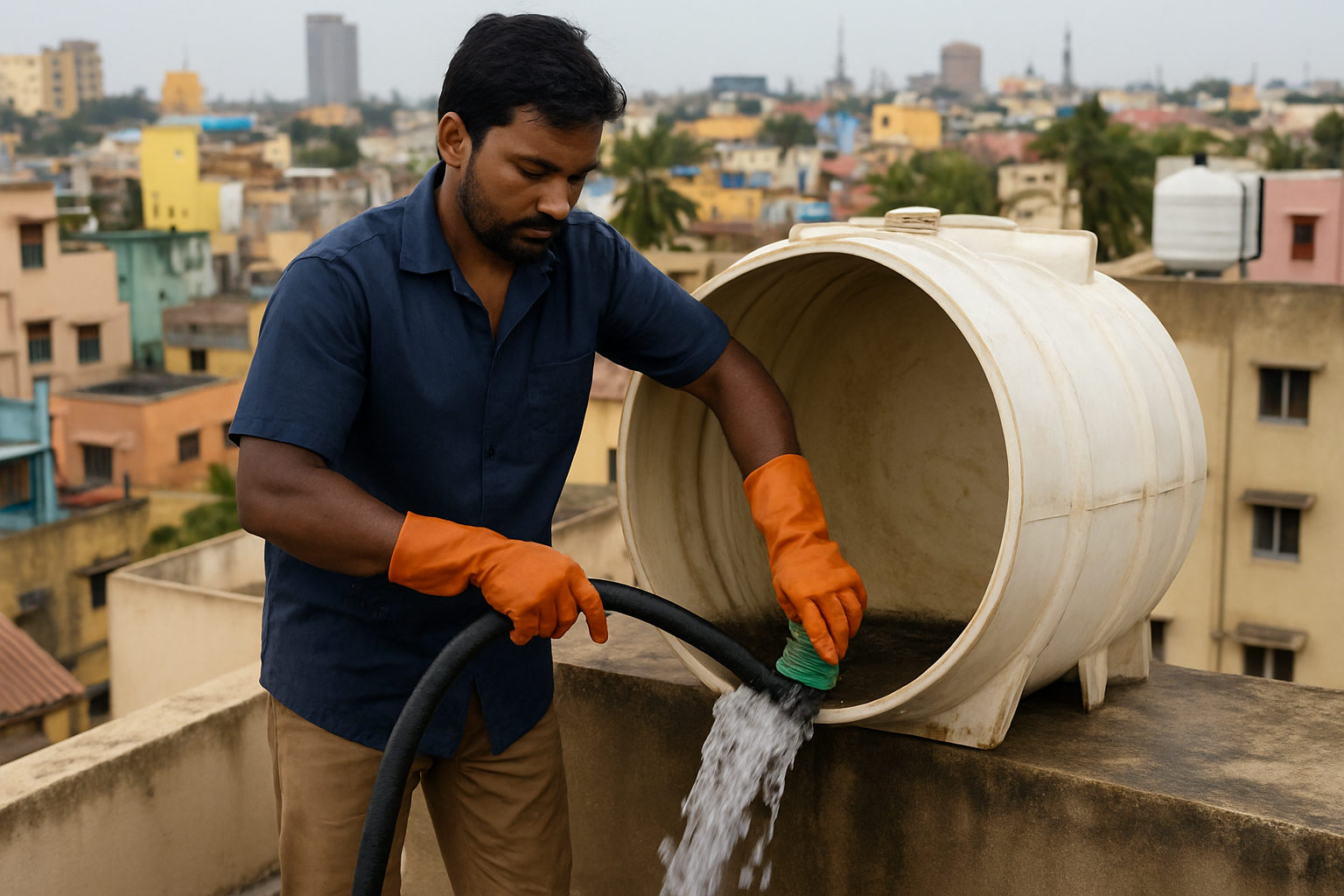
In This Guide
- Why Chennai tanks get dirty faster
- Tank type cleaning frequency
- 2026 Chennai price list
- How to verify the cleaning worked
- Post-cleaning maintenance
- Frequently Asked Questions
Why Chennai Tanks Get Dirty Faster Than You’d Expect
Chennai’s water supply carries high dissolved mineral content. Calcium and magnesium deposits build up fast as hard white scale on tank walls, trapping bacteria underneath in a layer called biofilm. Once biofilm takes hold, standard scrubbing won’t touch it. You need anti-bacterial agents.
The monsoon season (June to November) makes this worse. Algae spores slip through loose or cracked tank lids, especially on terrace-mounted tanks in areas like Madhavaram, Perambur, and Porur where older concrete structures are everywhere. Terrace tanks sit in direct solar heating during Chennai’s brutal summer months. Water above 30°C speeds up bacterial multiplication significantly.
Aging municipal supply pipes in many Chennai localities leak rust and sediment into tanks when pressure fluctuates. Residents in Virugambakkam and Ekkatuthangal often report brownish water in the days after a Metro Water supply cut. That’s sediment disturbance happening inside your tank.
The Greater Chennai Corporation has linked contaminated overhead and underground tanks to waterborne illness clusters, particularly typhoid and gastroenteritis cases that spike post-monsoon. Clean before monsoon starts (May) and after it ends (December). You’ll reduce household exposure during the highest-risk periods.
Tank Type: Why Cleaning Frequency Differs
Not every tank needs the same schedule.
- Overhead concrete tanks. Porous surfaces. Algae penetrates micro-cracks and regrows within 8 to 10 weeks in this heat. Clean every three to four months, not annually.
- Underground sumps accumulate sludge at the base from settled sediment and dead organic matter. That sludge creates anaerobic conditions producing hydrogen sulphide, which explains the rotten egg smell some residents notice. Four to six months between cleanings.
- Fiberglass or plastic overhead tanks resist algae better than concrete but develop biofilm on smooth walls. Biofilm won’t show up to the naked eye but shows up fast in bacterial counts. Clean every six months or when water starts to smell off.
2026 Chennai Water Tank Cleaning Price List
| Tank Type | Starting Price | Duration |
|---|---|---|
| Overhead plastic/fiberglass | ₹779 | 60 mins |
| Overhead concrete | ₹1,199 | 75 to 90 mins |
| Underground sump | ₹1,449 | 2 to 3 hours |
| Mechanised (commercial/large) | ₹1,500 to ₹5,000 | Varies by size |
These figures are per-tank from active Chennai service listings as of mid-2026. Larger tanks, difficult access (narrow terrace stairways in Royapettah or dense lane buildings in Perambur), and UV treatment add-ons push costs higher. For water tank cleaning pricing in Kochi, the structure mirrors Chennai but rates shift by city.
₹779 is the actual starting price for overhead tank cleaning in Chennai (2026), based on HomeTriangle listings with 2,231+ reviews in this category.
How to Verify the Cleaning Actually Worked
Most guides skip this entirely. A technician leaving doesn’t mean your water is safe.
Within 24 Hours
- Collect a glass of water after the tank refills. Hold it to natural light. Clean water should be clear, no visible particles or colour.
- Smell the water at the tap. Any sulphurous or musty odour means residual biofilm or incomplete sludge removal.
- Fill a white bowl or bucket and let it sit 24 hours. Brown or grey settling at the base tells you the tank floor wasn’t fully cleared.
What to Request from the Service Provider
- Before-and-after photos of the tank interior, not just the exterior or equipment
- The disinfectant brand, dilution rate, and safety data sheet if possible
- Cleaning duration log. A proper mechanised clean of a 500-litre overhead tank takes at least 60 minutes.
- Water sample test report from a certified lab if you have young children or elderly members in the home
Providers like Urban Tank Cleaners use a seven-stage process that ends with UV germicidal treatment. Requesting confirmation that UV treatment was applied, not just anti-bacterial spray, is perfectly reasonable for concrete tanks with chronic algae problems.
A tank that looks clean after draining can still carry a dangerous bacterial load. The disinfection and UV stages convert a visually clean tank into one that’s microbiologically safe.
Post-Cleaning Maintenance to Delay Re-Contamination
Cleaning buys you time. These habits extend it significantly.
- Check that the tank lid fits flush with no gaps. Even 2cm on a Porur terrace during monsoon is enough for algae spores to enter.
- Don’t store water longer than 48 hours without turnover. Stagnant water in a clean tank re-colonises with bacteria faster than most people realise.
- Monthly visual check using a phone torch through the access lid. Look at the waterline for green discolouration or sliminess on walls.
- Pre-monsoon (May) and post-monsoon (December) are your two non-negotiable cleaning windows for Chennai homes.
If you’re also planning deep house cleaning around the same time, schedule both together. You’ll cut disruption to your household water supply to a single day.
Frequently Asked Questions
What is the cost of water tank cleaning in Chennai?
Overhead plastic tank cleaning starts at ₹779 for a standard tank. Overhead concrete tanks start at ₹1,199 and underground sumps from ₹1,449. Larger commercial tanks and mechanised deep cleaning range from ₹1,500 to ₹5,000 depending on tank size and access difficulty.
How often should water tanks be cleaned?
Overhead concrete tanks in Chennai need cleaning every three to four months due to algae growth and porous surfaces. Plastic and fiberglass overhead tanks need cleaning every six months. Underground sumps every four to six months. If you notice odour, discolouration, or visible sediment, clean immediately regardless of schedule.
How much does it cost to clean out a water tank?
In Chennai, a single residential tank costs ₹779 to ₹1,449 to clean professionally. Multiple tanks in the same visit typically receive a discount. Commercial or large-capacity tanks run ₹1,500 to ₹5,000. Cost depends on tank type, size, and accessibility.
How to clean a 10,000 litre water tank?
A 10,000-litre tank requires professional mechanised cleaning. The process involves pumping out all stored water, high-pressure washing the walls and ceiling, sludge removal with a slurry pump and wet vacuum, anti-bacterial spray, and UV germicidal treatment. Don’t attempt DIY cleaning at this scale without industrial oxygen meters, harnesses, and confined-space safety equipment. Book a certified mechanised cleaning service.
Need a verified water tank cleaning professional in Chennai? Find one on InstantWebsite.in with real reviews and upfront pricing.
The Bottom Line
Pricing in Chennai is straightforward. Verification is where most homeowners slip up. Ask for before-and-after photos, confirm disinfection was applied, and run the 24-hour settling test yourself. Pre-monsoon cleaning is the single highest-leverage action you can take for household water quality this year.