Plumber in Central Delhi: 2026 Prices & Hiring Guide
Hire a plumber in Central Delhi with confidence. Real 2026 pricing, how to verify credentials, and what Central Delhi's older buildings demand.
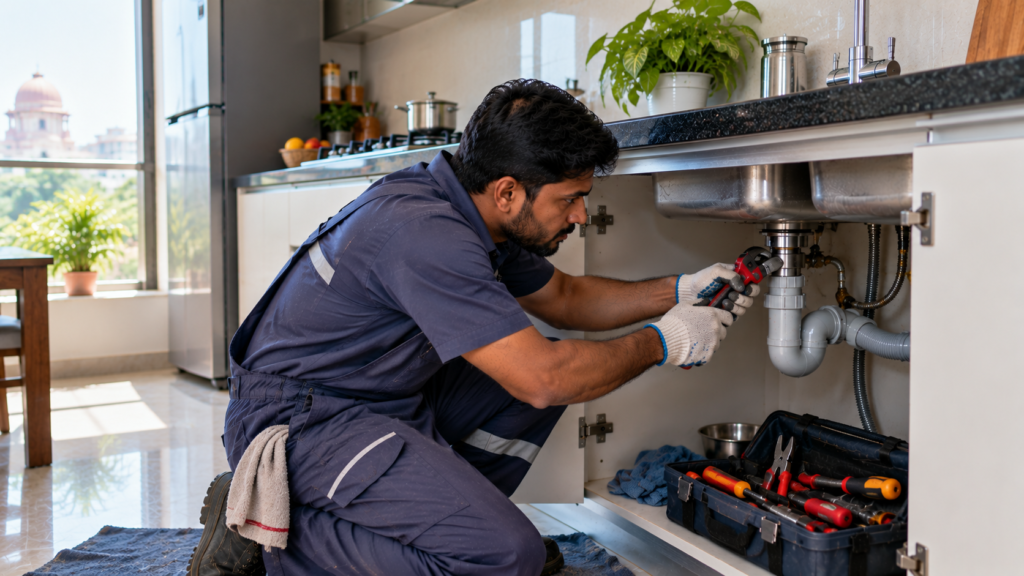
Finding a reliable plumber in Central Delhi means dealing with some of the oldest pipe networks in the city, erratic municipal water pressure, and contractors who range from fully licensed to completely unregistered. This guide cuts through that. You’ll get real pricing benchmarks, a clear method for vetting credentials, and a decision tree for emergencies versus planned work, all specific to Central Delhi’s infrastructure.
Why Central Delhi plumbing is different
Central Delhi covers Connaught Place, Karol Bagh, Paharganj, Daryaganj, ITO, and Old Delhi. A large share of the residential and commercial stock here was built before 1985. Cast iron supply pipes. Galvanised steel risers. Shared sewage lines that were never designed for today’s water usage volumes.
Delhi Jal Board supply to Central Delhi zones is inconsistent. Pressure during peak hours (6 to 9am and 6 to 9pm) can drop sharply in areas like Chandni Chowk and Paharganj, pushing residents to rely on overhead tanks and submersible motors. Hard water is a real issue here—high mineral content causes scale buildup inside pipes and geyser elements faster than in newer colonies like Dwarka or Rohini. You’ll deal with blocked inlet valves and reduced flow every 18 to 24 months if your building runs on municipal supply without a softener.
Monsoon season (July to September) brings a different problem. Drainage backflow in low-lying areas around Daryaganj and Old Delhi becomes the real headache. If your kitchen or bathroom drain gurgles or reverses during heavy rain, that’s a shared sewage line issue, not a simple blockage. You need a licensed contractor, not a local handyman.
What plumbing actually costs in Central Delhi
Central Delhi pricing sits slightly above North Delhi rates but below South Delhi for the same jobs. Travel demand plays a part. So does the extra diagnostic time older buildings demand. Here are honest benchmarks based on current market rates from booking platforms serving Delhi NCR.
| Job Type | Central Delhi Range | Notes |
|---|---|---|
| Tap repair or replacement | ₹96 to ₹200 | Higher end for concealed fittings in older walls |
| Drain blockage removal | ₹193 to ₹400 | Cast iron drain lines take longer to clear |
| Toilet flush tank repair | ₹145 to ₹350 | Parts markup varies widely, ask upfront |
| Overhead tank leakage repair | ₹145 to ₹500 | Terrace access in older buildings adds time |
| Pipe replacement (per metre) | ₹300 to ₹800 | Concealed pipes in pre-1980 walls cost more |
| Emergency call-out (after 9pm) | ₹300 to ₹600 extra | Some contractors waive this if job is large |
The biggest price driver isn’t the job itself. It’s access. Getting to a corroded joint inside a wall built in 1972 takes three times as long as the same work in a 2010 DDA flat. Always ask whether the quote includes wall cutting and restoration, or just the plumbing fix. That difference can add ₹1,200 to ₹3,200 depending on how deep the pipe runs.
Planning multiple repairs across an older property? Check out our guide to plumbing costs in West Delhi for a useful comparison on how building age affects pricing across Delhi zones.
Licensed vs. unlicensed: how to actually verify
Delhi Jal Board and the Municipal Corporation of Delhi both maintain lists of registered plumbing contractors. An unlicensed plumber working on your water supply line is a liability problem, not just a quality one. If they cause damage to shared building infrastructure, your RWA (Resident Welfare Association) can hold you responsible for repair costs. That’s not theoretical.
Before booking anyone for work beyond a simple tap repair, ask for two things. Their GST registration number (any contractor billing above ₹20 lakh annually must be registered). And a written quote on a letterhead or WhatsApp document that names the specific job, parts included, and warranty period. A contractor who refuses either? Red flag. Full stop.
For verified contractors in Central Delhi, platforms like NoBroker and Urban Company run background checks and carry third-party damage protection. Urban Company lists protection up to ₹10,000 per visit. That’s worth something when you’re dealing with shared water lines in a 40-year-old building.
DIY vs. call a professional: a quick decision guide
- DIY-safe: Replacing a tap washer. Tightening a loose shower head connection. Cleaning a clogged drain trap with a plunger.
- Call a professional: Any work on concealed pipes, anything involving the main water supply valve, motor installation or replacement, overhead tank leakage, or anything you’re unsure about.
- Emergency, call immediately: Burst pipe flooding a room. Sewage backflow into bathroom or kitchen. Complete loss of water supply to the flat.
Here’s what I’ve learned working through Central Delhi plumbing stories: what looks like a minor wall leak is often a corroded galvanised joint that’s been leaching for months. DIY patching here delays the real fix and weakens the surrounding masonry. You see a damp patch on an internal wall? Treat it as a professional job.
Seasonal tip worth knowing: summer in Central Delhi (April to June) brings significant pressure drops due to high municipal demand. If your motor starts pulling air and losing prime, that’s a tank level issue, not a motor fault. Check the float valve in your overhead tank before calling a plumber. You might save ₹400 to ₹800.
How to get a fair quote and protect yourself
- Describe the problem specifically before anyone arrives. “Water coming from base of toilet” is more useful than “toilet problem” and lets you compare quotes honestly.
- Ask for a written quote before work starts. WhatsApp text is fine. It should name the job, parts cost separately from labour, and warranty duration.
- For jobs above ₹2,000, ask whether old parts will be shown to you before disposal. This prevents parts upselling on items that weren’t actually replaced.
- Confirm the warranty in writing. Reputable platforms offer 30 days on workmanship. Independent contractors should offer at least 7 to 15 days. Get it in writing.
Dealing with electrical faults in the same older property? Our Central Delhi electrician guide covers credential checks and pricing for that trade using the same framework.
Frequently Asked Questions
What is the 135 rule in plumbing?
The 135 rule refers to the permitted angle for drain pipe bends. Instead of using a sharp 90-degree elbow (which restricts flow and causes blockages), plumbers use two 45-degree bends joined together, creating a 135-degree change in direction. This keeps waste water moving smoothly and reduces the risk of solid buildup at the joint. In Central Delhi’s older drainage systems, where cast iron pipes have narrowed further with scale, following this rule matters more, not less.
How to calculate plumbing charges?
Plumbing charges in Central Delhi have three components: the call-out or inspection fee (typically ₹48 to ₹150, often credited against the final bill), the labour rate for the specific job, and parts at market cost plus a contractor markup of 10 to 30 percent. For a drain blockage job quoted at ₹350, expect roughly ₹150 in labour and ₹200 in consumables or equipment time. Always ask for the breakdown before agreeing, not after.
What is the most popular plumbing company?
In Central Delhi, the most-used booking platforms for plumbing are Urban Company and NoBroker, both of which aggregate vetted independent plumbers rather than employing them directly. JustDial remains popular for finding local contractors by neighbourhood. For government-licensed contractors specifically, the Delhi Jal Board maintains a registered contractor list that is the most reliable source for work touching municipal supply lines.
How much do plumbers make in India?
According to available market data, the average pay for a plumber in India ranges from ₹10,000 to ₹25,000 per month, depending on experience, location, and employer. Entry-level plumbers earn toward the lower end. Those with several years of experience or skills in specialised work like concealed plumbing or commercial systems can command higher rates. In Central Delhi, where older infrastructure demands more diagnostic skill, experienced contractors often charge a premium over the national average.
Central Delhi’s plumbing market rewards preparation. Know your building’s pipe material before you call anyone. Get a written quote that separates labour from parts. Verify GST details or use a platform that does it for you. And treat any damp wall in a pre-1990 building as a professional job, not a DIY weekend project. The cost of cutting corners here compounds fast in a shared building with ageing infrastructure.