Water Tank Cleaning in Chandigarh: 2026 Prices & Guide
Water tank cleaning in Chandigarh costs ₹499, ₹699. Learn when to DIY vs. hire a pro, seasonal timing, tank inspection tips, and post-cleaning water…
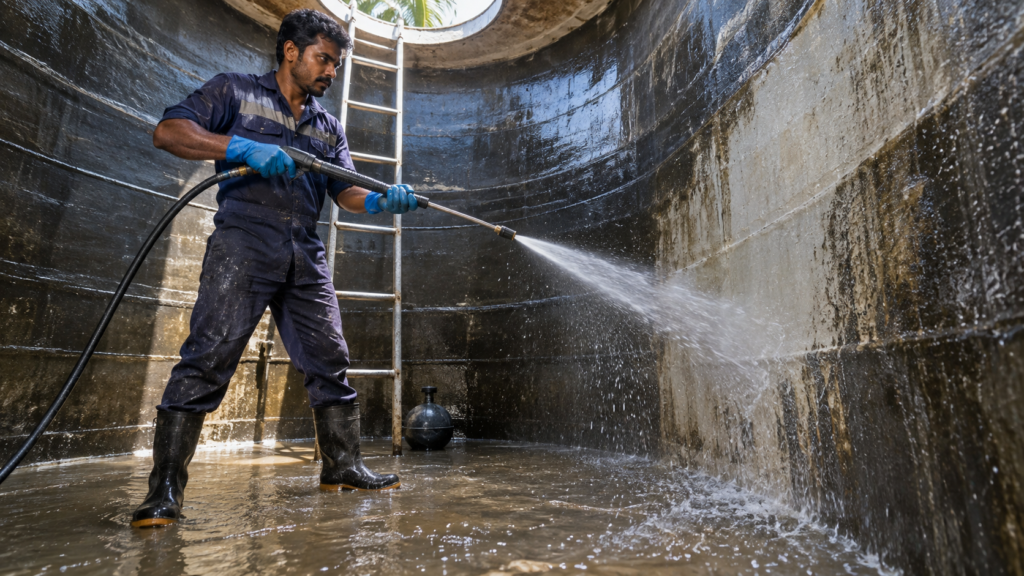
Water tank cleaning in Chandigarh runs ₹499 to ₹699 for a standard home tank. Size and condition matter. But here’s what really matters: do you actually need a professional, or can you handle it yourself? When should you schedule it? What warning signs say “don’t touch this, call someone”? This guide cuts through that confusion.
Why Chandigarh water tanks need cleaning more often than you think
Chandigarh’s municipal water comes from the Bhakra canal system, treated at Kajauli and Dhankouri plants. But treated canal water still carries dissolved minerals, silt, and whatever biological load the monsoon throws at it. I’ve seen tanks cleaned in March turn green by August—that’s not uncommon here.
Summer heat settles sediment fast. Monsoon (July through September) triggers algae blooms. In the Tricity region, this seasonal swing hits harder than in cities fed by borehells.
Tank material changes everything. Concrete tanks in older Sectors and housing colonies absorb moisture and breed microbial films faster than plastic. Plastic tanks in post-2000 construction (Mohali, New Chandigarh) are easier to inspect, but UV exposure cracks liners, and a cracked liner means cleaning won’t save you. You’ll need replacement. Steel tanks are rare in Chandigarh but demand the most careful chemical handling to prevent rust.
Cleaning frequency guideline for Chandigarh: Every 6 months for Sectors 7, 22 and older concrete tank buildings. Every 3 months during monsoon if you notice colour shift or odour. Plastic tanks in Mohali and Panchkula: once every 6 months minimum, ideally in May (before summer spike) and October (post-monsoon flush).
Pre-cleaning inspection checklist
Before you book anyone or grab a brush yourself, walk through this. It’ll tell you if cleaning solves the problem or if you’re looking at something worse.
- Tank age and material. Concrete older than 15 years often shows cracks or spalling. That means soil seeping in. Cleaning won’t fix it.
- Visible sludge or algae. Thin grey sediment at the bottom? Normal. Black sludge or green walls? That’s biological contamination. You need disinfection, not just scrubbing.
- Lid seal condition. Broken lid = birds, insects, dust get in. Replace it before you clean or the tank recontaminates in weeks.
- Inlet and outlet pipes. Look for rust or white calcium crusts. Hard water scaling means the problem continues after you clean. A plumber in Chandigarh should handle pipe assessment separately.
- Water colour and smell. Sulphur smell = bacterial growth. Rust colour usually points to pipe corrosion above the tank, not inside it.
DIY vs. professional: when each makes sense
A 500-litre plastic overhead tank with light sediment and zero algae? DIY all the way. A 2,000-litre underground concrete sump with green walls? Don’t even think about it. Call a professional.
The choice isn’t about how much work you’re willing to do.
It’s about safety and having the right tools.
DIY cleaning: step-by-step
- Drain completely. Turn off the inlet valve and run the outlet until it’s empty. Time this for evening so the tank refills overnight.
- Gear up first. Rubber gloves, face mask, non-slip shoes. Chandigarh rooftop access gets slippery fast, especially after rain.
- Scrub everything. Use a stiff brush (no metal on plastic). Mix sodium hypochlorite at roughly 50ml per 10 litres of water for disinfection. Don’t use strong acid chemicals on concrete tanks, they wreck the lining.
- Flush twice. Fill halfway, agitate, drain. Then repeat. One flush leaves chemical taste.
- Refill and verify. Wait 30 minutes after filling, then run a tap and check for colour and smell before drinking.
DIY cost breakdown: ₹200 to ₹400 in materials (bleach, brush, protective gear). Time: 2 to 3 hours for 500 litres.
Professional mechanized cleaning
Companies like Fixomes, CleanDin, and Grace Cleaning operate across the Tricity area with high-pressure jets and wet vacuums. They extract sludge without anyone descending into large tanks. Use them for anything above 1,000 litres, underground sumps, or visible heavy algae. Chandigarh rates start at ₹499 for basic jobs and climb to ₹699 or higher for heavy contamination. Urban Company lists this service too, same ballpark pricing.
“The difference between ₹499 and ₹699 isn’t the company. It’s how much sludge sits at the bottom. Stay on schedule and you’ll pay the lower price every time.”
Post-cleaning water testing in Chandigarh
Cleaning without testing is blind faith. If your household’s had stomach issues or the tank showed serious contamination, get a water sample tested after cleaning. The Chandigarh Pollution Control Committee and accredited labs in the Industrial Area (Phase I and Phase II) do basic testing. Request pH, TDS (total dissolved solids), total coliform count, and hardness. TDS over 500 mg/L or any coliform presence means the water isn’t safe to drink untreated, no matter how clean the tank looks inside.
For broader home hygiene worries beyond water, the same logic applies to indoor air and pest activity. A pest control inspection in Chandigarh after monsoon pairs well with a post-cleaning tank check, since standing moisture pulls insects in.
Seasonal timing guide for Chandigarh
| Season | Main risk | Action |
|---|---|---|
| April to June (summer) | Sediment concentration, scaling from hard water | Clean before peak demand; inspect inlet pipe |
| July to September (monsoon) | Algae bloom, turbid supply water | Inspect monthly; clean if colour changes |
| October to November (post-monsoon) | Residual biological load | Full clean and disinfection |
| December to March (winter) | Low risk period | Visual inspection only for most households |
Frequently Asked Questions
How much does it cost to clean out a water tank in Chandigarh?
Professional cleaning starts at ₹499 for a standard home tank with light sediment and goes to ₹699 or more for heavy algae or sludge. DIY costs ₹200 to ₹400 in materials for a 500-litre tank. Tank size, material (concrete, plastic, steel), and contamination level all shift the final price.
How often should a water storage tank be cleaned in Chandigarh?
At least twice yearly: April/May before summer peak, and October after monsoon. Older Sectors with concrete tanks, or anyone spotting odour or colour change, should go every three months during monsoon. Chandigarh’s canal-fed water carries more seasonal silt and biological load than borewell-supplied cities.
What is the best way to clean a water tank?
Drain fully, scrub walls and floor with a stiff brush using diluted sodium hypochlorite, flush twice, and refill. For tanks above 1,000 litres or with visible algae, hire a mechanized professional service using high-pressure jets and wet vacuums. Always replace a broken lid seal before refilling or contamination comes back fast.
How to clean a 5000 litre water tank?
Manual scrubbing won’t cover a 5,000-litre tank safely. Book a mechanized service like Fixomes, CleanDin, or Grace Cleaning (all cover Tricity). Expect 2 to 3 hours. Drain the tank fully the night before to save time. Test water before drinking after cleaning.
Schedule cleaning in May and October, those two windows cover the worst risk periods. Older Sector concrete tanks need a pre-cleaning inspection first. And if the lid’s broken, fix that before anything else.
A ₹499 service every six months beats installing water filters after years of contaminated supply.
Need a verified water tank cleaner in Chandigarh with real reviews? Search instantwebsite.in for local pros and Google ratings. For pricing context in other cities, see the water tank cleaning guide for Bhopal.