Water Tank Cleaning in Dwarka Delhi | Expert Service Guide
Water tank cleaning in Dwarka Delhi: costs, contamination signs, step-by-step service checklist, and how to verify a job was done right.
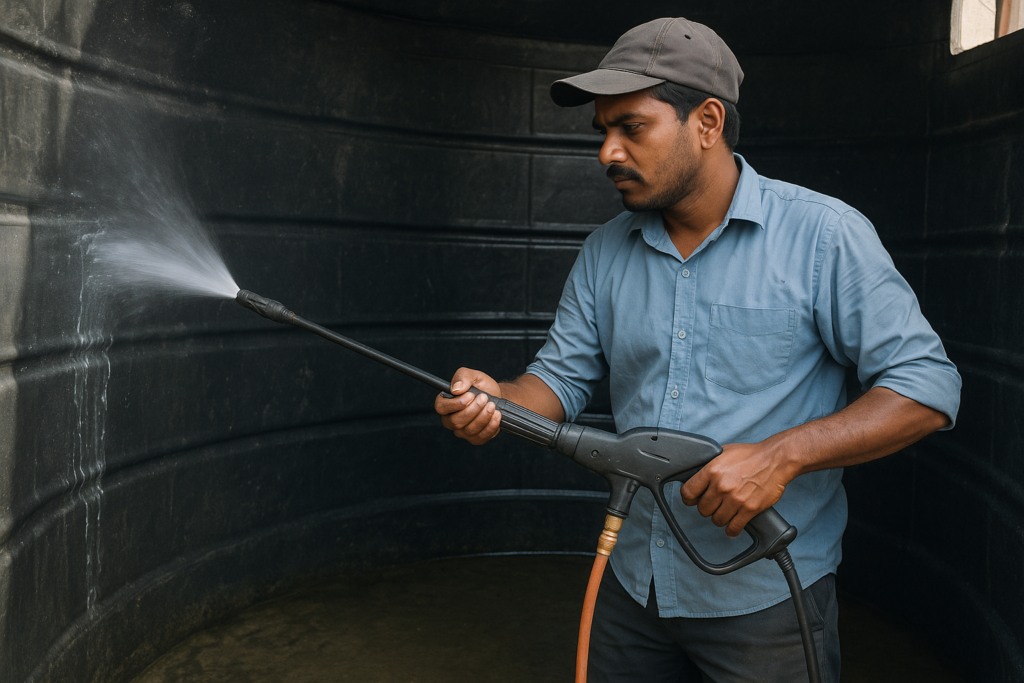
Water tank cleaning in Dwarka runs ₹749 for a small overhead tank, ₹1,399 or more for underground sumps. But here’s what actually matters: knowing if your tank needs professional cleaning right now, and whether the crew that showed up actually did the job when they left. Not what they claimed. What they actually did. This guide covers both.
What actually builds up inside Dwarka’s water tanks
Dwarka’s water comes through Delhi Jal Board lines. By the time it reaches your overhead tank, it’s traveled through aging distribution pipes that shed rust and sediment. After 12 months sitting untouched, the bottom of your tank isn’t just dusty. It’s a layer of iron-oxide sludge, calcium carbonate scale (Delhi’s water is notoriously hard), and often a thin bacterial biofilm coating the walls.
Borewell supply presents a different problem entirely. Borewell water in several Dwarka sectors carries higher total dissolved solids (TDS) and microbial load than municipal supply. Algae grows fast during monsoon, especially in tanks exposed to light. Sector 14 and Sector 18, with older building stock, show heavier sediment simply because the pipework is older.
The health piece isn’t theoretical. Contaminated tank water causes gastroenteritis, skin irritation, and in severe cases typhoid. If your household has had recurring stomach issues with no other explanation, inspect the tank first.
Warning signs you should not ignore
- Water runs cloudy or milky for the first few seconds from any tap
- A musty, earthy, or chlorine smell that wasn’t there before
- Visible brown or black particles settling in a glass of water
- Skin feels dry or itchy after bathing, with no soap change
- Tank hasn’t been professionally cleaned in more than 12 months
How often Dwarka residents should clean their tanks
For municipal supply connected to DJB, every six months is the practical standard. For borewell-fed tanks, every four months is safer given the higher sediment and microbial load. Post-monsoon cleaning (September or October) is non-negotiable: rains push surface contamination into borewell heads and compromise overhead tank covers if seals have degraded.
Many Dwarka residential societies now mandate documented cleaning records as RWA compliance. No proof on file? Your maintenance committee may fine you under local building maintenance rules. A legitimate provider gives you a dated, signed completion certificate after every visit.
Cost breakdown: what you’re actually paying for
| Tank Type / Size | Starting Price | What Affects Final Cost |
|---|---|---|
| Overhead tank, 500L, 1,000L | ₹749 | Roof access difficulty, sediment depth |
| Underground sump | ₹1,399 | Sump size, confined-space entry, pump-out requirement |
| Large society overhead tank, 5,000L+ | ₹2,500 and above | Volume, number of cleaning staff, disinfectant quantity |
These prices align with what providers like Vijay Home Services and JP Tank Cleaning publish for Dwarka. Underground sumps cost more because the job requires confined-space entry, a pump to drain standing water, and significantly more disinfectant. A provider quoting the same flat rate for both tank types is cutting corners on one of them.
Sector 14, Sector 18, Sector 7: pricing stays similar across all of them. The real cost driver is tank access. A rooftop tank behind a locked terrace that needs society coordination adds time, therefore cost. Always confirm whether your quote includes disinfection or charges it separately.
Bundle tank cleaning with other annual services, like a deep house cleaning, and you’ll save coordination headaches across multiple vendors in one quarter.
What a proper cleaning job includes, step by step
- Pre-inspection. Technician checks tank condition, lid seal, inlet and outlet valves, internal surface. A written condition report takes five minutes and tells you what you’re dealing with.
- Complete drainage. All water gets flushed out. No legitimate service cleans a full or half-full tank.
- Physical scrubbing. Walls, floor, corners get scrubbed to remove biofilm and scale. Cheap services skip this: they rinse fast and call it done.
- Disinfection. Chlorine-based or food-grade disinfectant hits all internal surfaces and sits for 20 to 30 minutes contact time. Ask which disinfectant and its concentration.
- Final rinse and refill. Tank flushes with clean water, then refills for household use.
- Post-cleaning documentation. You get a completion certificate. Good providers also offer a basic TDS or water quality reading post-job.
If the crew finishes an overhead tank in under 30 minutes, push back. A proper 1,000L job with scrubbing and disinfection dwell time takes 45 to 90 minutes minimum.
The multi-step approach mirrors what’s standard across Delhi home services, including water tank cleaning in Central Delhi.
Red flags: how to spot an unqualified cleaner
- No written quote before work starts
- Can’t name the disinfectant or its concentration
- No completion certificate or service record offered
- Skips drainage and scrubs a water-filled tank
- No protective gear (gloves, boots) for confined-space underground sump entry
- Pressure to pay full cash upfront with no receipt
Frequently Asked Questions
What is the cost of water tank cleaning services in Delhi?
Overhead water tank cleaning starts at ₹749 for tanks up to 1,000 litres. Underground sump cleaning starts at ₹1,399. Final pricing depends on tank size, contamination level, and tank access difficulty. Large society tanks above 5,000 litres typically cost ₹2,500 or more.
How to clean a 10,000 litre water tank?
A 10,000 litre tank requires professional service. The process: shut the inlet valve and disconnect pumps, drain completely, scrub all internal surfaces to remove sediment and biofilm, apply a food-grade disinfectant and allow 20 to 30 minutes of contact time, rinse thoroughly, then refill. At this scale, DIY cleaning is impractical and risks incomplete disinfection.
Schedule cleaning before you see symptoms, not after. Every six months for municipal supply. Every four months for borewell. Get a written quote, confirm the disinfectant, request a completion certificate. That paper trail protects you with your RWA and proves the job happened. A provider who won’t provide all three? Find one who will.