Water Tank Cleaning Delhi NCR: Local Experts Guide
Find trusted water tank cleaning services across Delhi NCR. Compare local experts in South Delhi, Dwarka, Noida & Gurgaon. What to ask, what to pay, what…
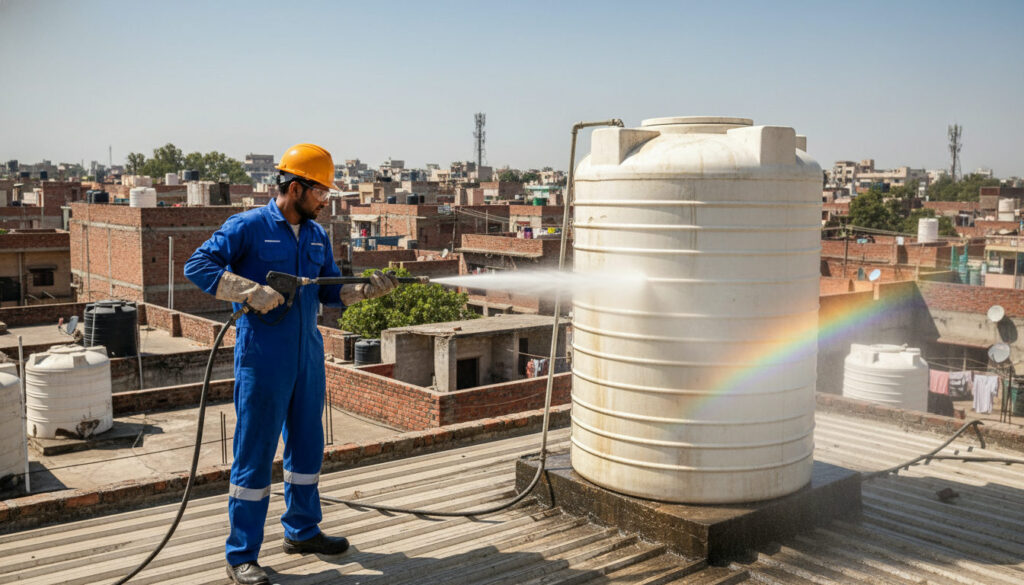
Water tank cleaning services across Delhi NCR operate in South Delhi, Dwarka, Rohini, Noida, and Gurgaon. Most jobs take one to three hours. You’ll want tanks cleaned at least every six months. This guide walks you through finding a verified local expert, understanding what the work actually involves, and making sure you’re not paying for half-finished jobs.
What’s in this guide
- Why Delhi NCR tanks get dirty fast
- What a proper cleaning job looks like
- Which areas are covered
- How to pick the right service
- Overhead vs underground tanks
- Frequently asked questions
Why Delhi NCR tanks get dirty faster than you think
Delhi’s municipal water carries sediment, rust, and mineral deposits. They settle at the bottom of storage tanks over time. Then April hits. Temperatures push past 42 degrees Celsius. You’ve got perfect conditions for algae and bacterial growth inside a tank that looks fine from the outside.
Dirty water doesn’t always look dirty. That’s what makes it dangerous. Contaminated tanks have been linked to typhoid, dysentery, and gastrointestinal infections. Sediment also blocks inlet pipes and reduces pressure, which kills pumps and fittings faster. A six-monthly cleaning isn’t overhead. It’s cheaper than a plumber call-out and infinitely cheaper than a medical bill.
Tanks neglected for six months develop visible sludge and sediment layers at the base. Algae growth affects taste and odour before bacteria becomes a serious health risk.
Most residents notice the problem too late. Someone gets sick. Or a neighbour mentions their tank got cleaned and yours hasn’t been touched in 12 to 18 months. Not unusual. Just not smart.
For a deeper look at vetting operators before you call, the guide on water tank cleaning services in Delhi covers that process in detail.
What a proper cleaning job looks like, step by step
Not every operator gets this right. Here’s what thorough work involves. Ask for it. Check when they leave.
- Inspection. The technician checks for cracks, corrosion, contamination before starting. Any damage found should be documented and shown to you.
- Draining. All water gets pumped out. Fully empty. If they skip this, the cleaning is incomplete.
- Scrubbing. Trained technicians scrub interior walls and floor with specialised brushes to remove algae, sludge, and sediment deposits stuck to surfaces.
- High-pressure cleaning. Water jets dislodge stubborn contaminants from corners and joints that manual scrubbing can’t reach.
- Vacuum removal. Dislodged debris and wastewater get vacuumed out, leaving the interior dry and clean before disinfection.
- Disinfection. Eco-friendly, non-toxic disinfectants eliminate bacteria and pathogens. Reputable operators use approved products safe for drinking water systems.
- Rinsing. The tank gets rinsed thoroughly to remove cleaning agents before refilling.
- Final inspection and documentation. Before-and-after photos. Written record. Ask for both. If they refuse, that tells you something.
- Refill. Tank refilled and ready.
The documentation step separates professionals from people going through motions. Before-and-after photos take two minutes. Any operator skipping them is probably cutting corners elsewhere too.
One to three hours depending on tank size and neglect level. Badly neglected tanks take longer.
Which areas in Delhi NCR have local experts available
Coverage is solid across Delhi NCR. Operators on Sulekha (as of May 2026) cover central Delhi, South Delhi, Dwarka, Rohini, Vasant Kunj, Vasant Vihar, Hauz Khas, Greater Kailash, and Saket. NCR coverage extends to Noida, Gurgaon (DLF areas), and Faridabad.
Named operators include Shree Balaji Tank Cleaning (Gurgaon, Rohini, Dwarka), SP Water Tank Cleaner (South Delhi, Vasant Kunj, Vasant Vihar, Noida, Gurugram), GD Water Consult (Delhi, Noida, Gurgaon), and P.R Water Tank Cleaning (Delhi NCR generally). Sulekha’s May 29, 2026 Delhi listing also shows ASK Enterprises, Unique Water Tank Cleaners, Mr. Tank, Watech International, and Neroclean.
If you’re in a colony or sector not listed above, call two or three operators directly. Most cover wider radius than websites suggest, especially South and West Delhi.
In West Delhi? The water tank cleaning guide for West Delhi has area-specific prices to benchmark against.
How to pick the right service: five things that actually matter
Most people search “water tank cleaning near me” and call the first result. Starting point, sure. Not a filter.
Check their Google reviews first
Operators with 50 or more reviews and 4.5-plus rating consistently outperform those with fewer. It’s not vanity. Repeat customers trust them enough to call again. Read the negative reviews too. One or two bad in 80 is normal. Ten bad in 40 is a pattern.
Ask about disinfectant products
Reputable operators use eco-friendly, non-toxic disinfectants approved for potable water. If the technician can’t name what they’re using or says it doesn’t matter, that’s a problem. You’re drinking this water.
Confirm they provide documentation
Before-and-after photos and written service record. Ask upfront. Operators including this as standard operate at a higher level.
Check availability windows
Several Delhi NCR operators offer seven-day-a-week service with emergency slots. Need same-day service (leaking tank, contamination concern, sudden water quality change)? Confirm emergency availability before booking, not after.
Get a price quote in writing before the job starts
Prices vary by tank size and type. Get the figure confirmed before work begins. For detailed breakdown by tank type and capacity, the water tank cleaning charges guide for Delhi covers what you should expect to pay.
Overhead tanks vs underground tanks: not the same job
| Factor | Overhead Tank | Underground Tank |
|---|---|---|
| Access difficulty | Rooftop access required | Confined space entry, more complex |
| Common contamination | Algae (sunlight exposure), dust, bird debris | Sediment, silt, groundwater seepage |
| Cleaning method | Scrubbing, high-pressure jet, disinfection | High-pressure vacuum, mechanised cleaning |
| Job time | 1 to 2 hours typically | 2 to 3 hours typically |
| Recommended frequency | Every 6 months | Every 6 months |
| Non-invasive option available | Some operators offer this | Yes, GD Water Consult specifically offers this |
Underground tanks are trickier. They accumulate more sediment and silt, and confined-space access requires more equipment. Make sure your operator has explicit experience with your tank type. Not all residential operators handle both.
Non-invasive cleaning (mechanised work without draining) is available from some Delhi NCR operators for tanks where drainage is difficult. Worth asking about if you’ve struggled scheduling a standard clean.
The six-month rule applies to both. Skip one cycle and you’re looking at twice the cleanup time and higher bacterial contamination risk in the water your family drinks.
Frequently Asked Questions
How often should a water tank be cleaned in Delhi NCR?
Every six months. Delhi’s water supply and climate mean sediment, algae, and bacterial growth develop faster than in cooler areas with cleaner supply. Annual cleaning is the minimum. Six-monthly is standard recommendation across NCR operators.
How long does a water tank cleaning service take?
One to three hours for most residential tanks. Overhead tanks (500 to 1,000 litres) typically take around an hour. Larger underground tanks or badly neglected tanks reach three hours. Commercial tanks need separate quotes and longer timeframes.
What areas in Delhi NCR do local experts cover?
Coverage includes South Delhi, Dwarka, Rohini, Vasant Kunj, Vasant Vihar, Hauz Khas, Greater Kailash, Saket, Noida, Gurgaon, and Faridabad. Most established operators cover wider radius than websites list. Call and confirm your specific locality before booking.
Is the tank safe to use immediately after cleaning?
Yes, once the final rinse is complete and tank refilled. Disinfectants from reputable operators are non-toxic and approved for potable water systems. The rinsing step removes any residual cleaning agents before use.
Do water tank cleaning services in Delhi offer emergency slots?
Several operators, including Shyamji Water Tank Cleaning and others on Sulekha, advertise seven-days-a-week availability including emergency response. Confirm this directly when calling. Ask for estimated arrival time rather than accepting vague “we’ll come today” promises.
Should I book through a platform or call a local operator directly?
Both work. Platforms like Sulekha and JustDial let you compare reviews side by side, useful if you don’t have a recommendation. Calling directly is faster, and some operators offer slightly better pricing without platform markup. Smart move: use a platform to shortlist two or three names, then call directly to confirm availability and price.
The practical takeaway
Find an operator with 40 or more Google reviews and 4.5-plus rating. Confirm they cover your specific area and tank type. Get a written price before work starts. Ask for before-and-after photos when it’s done. That’s your checklist. Most people unhappy with tank cleaning skipped one of those four steps.
Six-monthly cleaning isn’t optional in Delhi NCR. The water quality, the heat, the sediment load in municipal supply make it practical necessity, not luxury. Book it like a gas cylinder refill. Routine, not reactive.