Water Tank Cleaning Delhi: Before & After Photos Guide
See real before & after photos of Delhi water tank cleaning. Understand the full process, what a proper job looks like, and how to pick the right service.
Reviewed by Ankit Singh
Water tank cleaning in Delhi costs anywhere from ₹800 upward, depending on tank size and type. But here’s the thing: price isn’t what you should focus on first. The real question is what does a properly cleaned tank look like compared to one that’s been neglected? This guide shows you exactly that, walks you through the full cleaning process, and tells you how to pick a service that actually delivers the result in the photo, not just promises it.
What you actually see inside a dirty Delhi water tank
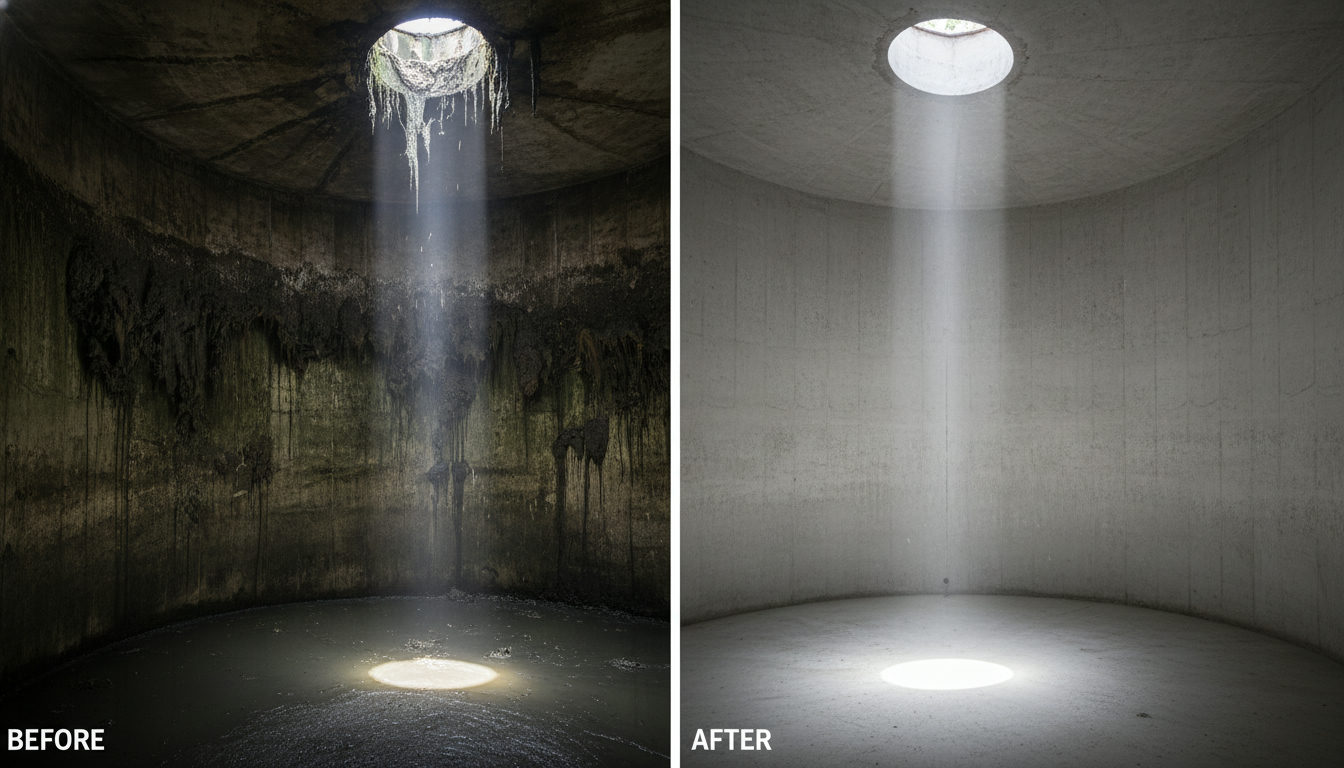
Most Delhi residents have never actually looked inside their overhead or underground tank. That’s the problem right there. If you opened yours right now, you’d likely find one or more of these things:
- Sludge at the base. A thick dark layer of sediment, mineral deposits, and decomposed matter that builds up fast in hard-water areas like West Delhi and Rohini.
- Algae on the inner walls. Greenish or blackish growth, especially on tanks that get sunlight through cracks or translucent panels. Algae produces its own toxins.
- Biofilm coating. A thin invisible bacterial layer sticking to walls after algae or sludge has been sitting for months. You can’t see it, but your family drinks through it every day.
- Dead insects, lizards, or bird matter. More common than people admit. Delhi’s open-top tank installations in older RWA buildings are especially vulnerable.
- Rust staining in iron tanks, or white calcium scale deposits in concrete ones.
Services like JR Water Tank Cleaning and GD Water Consult, both active in Delhi NCR, post before-and-after reels because the visual contrast is the most effective way to show what’s actually inside. The “before” photos are genuinely alarming. And they should be.
The step-by-step professional cleaning process
A legitimate professional job follows a specific sequence. Skip steps, and you’re not getting deep cleaning. You’re getting a rinse. Here’s what the full process actually looks like:
- Drain the tank completely. Water is pumped out or drained through the outlet, with any remaining water removed manually. You can’t properly clean a tank with standing water in it.
- Dry vacuum of loose sediment. Wet-dry vacuums pull out the sludge layer at the base before scrubbing starts. Skip this and you’re just smearing sludge across the walls.
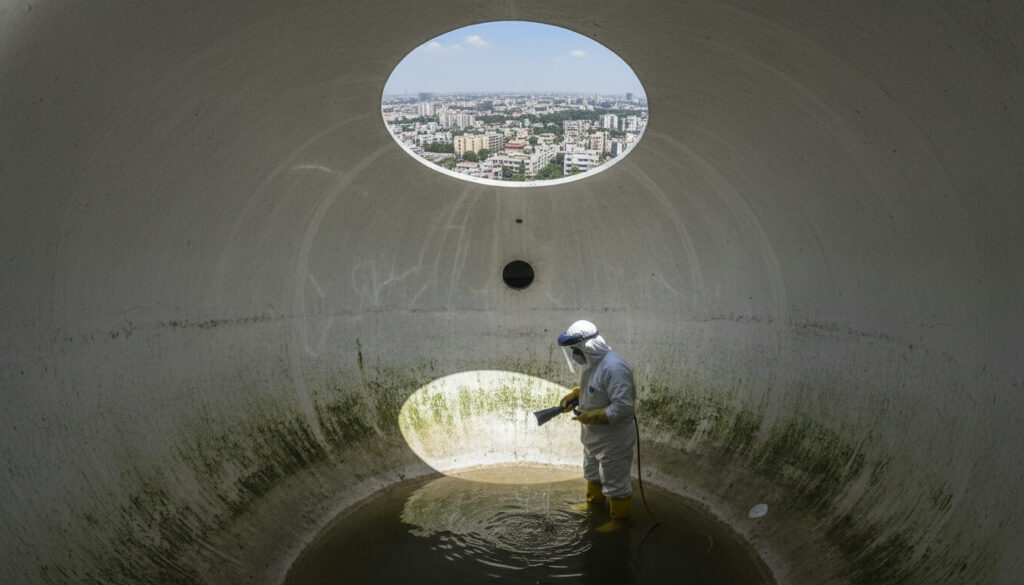
- Inner wall scrubbing. Technicians scrub all interior surfaces with stiff brushes, loosening biofilm, algae, and mineral scale. Mechanised cleaning services use rotating brush heads for this, which is faster and more thorough on large tanks.
- High-pressure wash. Pressurised water flushes the loosened debris toward the drain. This is where most of the visible “before” mess gets removed.
- Disinfection. A food-grade disinfectant solution is applied to all surfaces and left to dwell for the required contact time. This kills bacteria and eliminates odour. Without this step, scrubbing alone doesn’t make water safe.
- Final rinse and refill. The tank is flushed clean of any disinfectant residue, then refilled. Reputable services provide a before-and-after photo report at this stage.
Non-invasive services (GD Water Consult in Delhi NCR uses this method) skip the “man entry” step and clean using long-arm equipment through the tank opening. This works well for mid-sized overhead tanks and reduces contamination risk from the cleaning process itself.
Before and after: what changes and what to check
Here’s what a properly documented job should show:
| What you’re checking | Before cleaning | After proper cleaning |
|---|---|---|
| Base of tank | 2-5cm sludge layer, brown or black | Clean, visible floor surface |
| Inner walls | Algae patches, biofilm, scale deposits | White or grey original surface visible |
| Water colour (first draw) | Yellowish, turbid, or visibly cloudy | Clear, no visible particulates |
| Smell from tap | Earthy, musty, or chlorine-overloaded | Neutral, no odour |
| Outlet pipe area | Sludge accumulation around inlet/outlet | Clear, no blockage |
Ask for photographs at each stage, not just a single “after” shot. Any service worth hiring can provide this. If they can’t, you’ve got your answer about how thorough the job actually was.
For a broader comparison of services operating across the city, the guide to picking the right water tank cleaning service in Delhi breaks down what to look for beyond just the photos.
Overhead vs underground tanks: the cleaning difference
Not all Delhi tanks clean the same way. Process and cost differ significantly depending on tank type.
Overhead tanks (the Sintex-style plastic tanks on most residential rooftops) are smaller, easier to access, and faster to clean. Services typically handle these in 60 to 90 minutes. The before-and-after difference is stark because algae growth on plastic walls photographs clearly.
Underground tanks (common in older DDA flats, RWA buildings, and independent homes) are larger, require man-entry or mechanised long-arm tools, and take longer. JP Tank Cleaning, which operates across Delhi, Gurgaon, Noida, and Ghaziabad, specialises in mechanised cleaning of both tank types for exactly this reason. Mechanised equipment matters in underground tanks because manual scrubbing in a confined, poorly ventilated space carries real health risk for the technician.
Pricing reflects this. Services cite a starting rate of ₹800 for smaller residential tanks. Underground or large-volume tanks cost more. Exact pricing by tank size across Delhi localities is covered in the water tank cleaning charges guide for Delhi.
How often does a Delhi tank actually need cleaning?
Twice a year.
That’s what professional services and health guidelines agree on for Delhi specifically, and it’s more frequent than most residents assume. Why Delhi in particular? The city’s water supply picks up sediment, biofilm, and microbial load through the distribution network by the time it reaches your tank. Delhi’s summer heat (hitting 45°C and above in May and June) accelerates algae growth and bacterial multiplication inside the tank. A tank cleaned in January and left until December in Delhi isn’t the same situation as the same tank in a cooler, lower-sediment city like Shimla.
Six months is the outer limit. Buildings with older infrastructure or open-top tanks in dusty areas like Shahdara or Badarpur should be cleaning every four months. If you’re seeing cloudy water, smell from taps, or water that tastes “flat” even after boiling, the tank needs attention regardless of when it was last cleaned.
What to ask before booking, not after
How many people read reviews on Justdial before booking but don’t ask the service a single question? Most. Here are four questions worth asking before confirmation:
- Do you provide before-and-after photos on completion? (No = walk away.)
- What disinfectant do you use, and is it food-grade approved? Generic bleach isn’t the same as a certified tank disinfectant.
- Is your team trained and do they carry ID? This matters because you’re giving access to your water supply and rooftop.
- What’s included in the price? Some services quote a base rate and then add charges for large tanks, extra sludge removal, or travel outside central zones.
Ultra Clean Online, which covers Delhi NCR, advertises a 10% discount for bookings. Services like these often have structured pricing on their websites, making comparison easier than calling around. The Delhi NCR local experts guide goes deeper on vetting service providers before you let anyone near your tank.
Can you tell from photos alone if a job was done right?
Partly. Good before-and-after photos taken with a phone torch inside the tank tell you plenty. Clean walls, no sludge at the base, no visible algae patches. But photos can’t tell you if the disinfection step was done properly, or if the contact time was long enough, or if the outlet area was cleared. That’s why a written service report matters as much as the photos.
A few services in Delhi now provide a printed or WhatsApp-delivered cleaning report alongside the photos. That’s the standard worth holding others to. If you’re managing a residential society or commercial property in West Delhi, service expectations are slightly different, and the West Delhi water tank cleaning guide covers RWA-specific considerations.
Frequently Asked Questions
How much does water tank cleaning cost in Delhi?
Pricing starts at ₹800 for smaller domestic overhead tanks, per listings active in Delhi as of mid-2026. Larger underground tanks or those requiring mechanised equipment cost more. Always get a quote that specifies the tank size being priced, not just a flat rate.
How do I know if the cleaning was actually thorough?
Ask for before-and-after photos taken inside the tank with a light source. The base should show no sludge layer, walls should be scrubbed clean of any dark or green patches, and the service should provide a report noting which disinfectant was used and the contact time applied.
Is non-invasive tank cleaning as effective as manual scrubbing?
For overhead tanks and mid-sized underground tanks, non-invasive mechanised cleaning (using long-arm brush and vacuum tools through the access hatch) is comparable to manual entry cleaning and reduces contamination risk from human entry. For very large tanks with heavy sludge buildup, manual scrubbing may be needed in addition.
Should I ask for references or reviews before booking a tank cleaning service in Delhi?
Yes. Check Google reviews for the specific business, not just an aggregator listing. Justdial lists dozens of services for Delhi, but the Google review count and average rating for the individual business tells you more about consistent quality than a handful of Justdial testimonials.
How often should a Delhi apartment tank be cleaned?
Twice a year is the standard recommendation. Delhi’s heat in summer months and the sediment load in the city’s piped water supply mean that once a year isn’t enough for most households. Buildings with open-top tanks or older pipework may need cleaning every four months.
The bottom line
Before-and-after photos aren’t just marketing. They’re the clearest accountability tool you have when hiring a tank cleaning service in a market where most providers quote similar rates. Demand them. Then compare what you see against the benchmarks in this guide: clean base, scrubbed walls, a written disinfection report. That’s what ₹800 or more should buy you. Anything less isn’t a deal, it’s a rinse.