Water Tank Cleaning in Central Delhi: 2026 Price & Guide
Water tank cleaning in Central Delhi costs ₹699, ₹1,399. Learn why old-Delhi concrete tanks need specialist care, seasonal cleaning schedules, and…
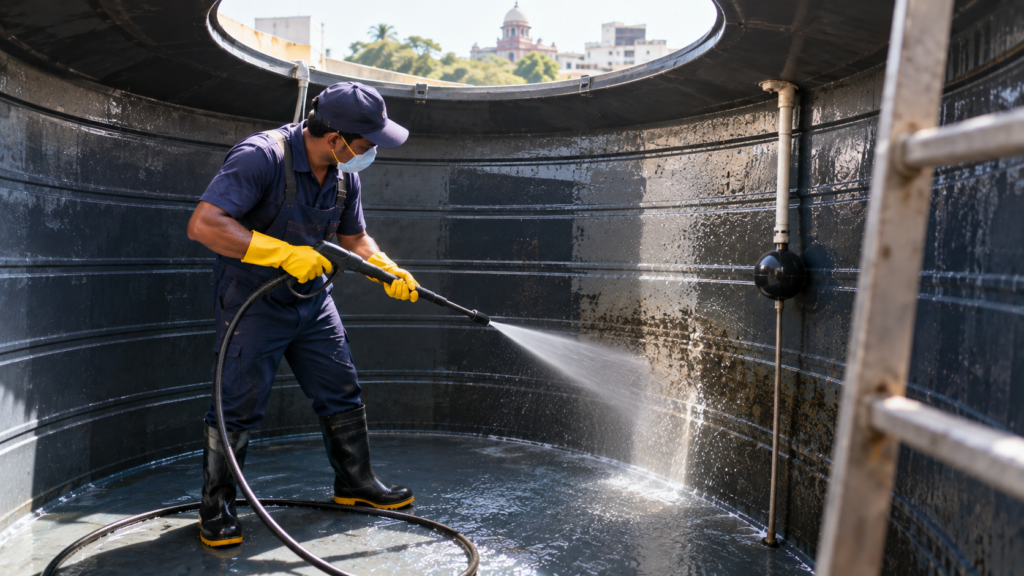
Water tank cleaning in Central Delhi runs ₹699 to ₹1,399. But the real problem isn’t the price tag. Central Delhi’s concrete tanks from before 1975, the hard groundwater here, and decaying cast-iron pipes upstream create contamination patterns that a basic rinse won’t touch. This guide walks you through what those patterns look like, when your tank actually needs cleaning, and how to know if the work was done right.
Why Central Delhi tanks are different from the rest of Delhi
Most buildings in Karol Bagh, Paharganj, Daryaganj, and Rajendra Nagar went up before 1975. The concrete tanks inside them absorb minerals over decades, turning porous. Bacteria settle into those pores. A technician who just jet-washes and sprays disinfectant without manually scrubbing the walls leaves that contamination layer sitting there. It comes roaring back in weeks. That porous surface is your real problem.
Central Delhi also gets water from multiple Delhi Jal Board (DJB) sources: the Yamuna, tube wells, whatever the season demands. Newer zones like Dwarka or Rohini tap single, planned networks. But here? The water sources keep switching. When they do, TDS (total dissolved solids) bounces around more than it should. High and variable TDS means more mineral scale deposits—calcium carbonate especially—caking onto tank walls and inlet fittings.
Concrete tanks in pre-1980 Central Delhi buildings pile up 2 to 4 times more sludge each quarter compared to stainless steel tanks in post-2000 construction. Wall porosity plus upstream pipe corrosion explain the gap.
Near Connaught Place and Chandni Chowk, many heritage buildings still run cast-iron or galvanised steel supply pipes. They corrode. Iron and zinc particles end up in your stored water. A metallic taste, especially in the morning. An orange-brown tint. That’s not just tank grime—it’s rust from the pipes, and your tank collects rust-colored sediment between cleanings. For more on how old plumbing affects water quality here, the guide on plumber costs and hiring in Central Delhi covers pipe inspection and replacement.
Central Delhi contamination calendar: clean at the right time
Timing matters. Here’s what happens inside your tank month by month.
June to August (monsoon)
Silt, mud, and airborne crud get in through loose or cracked lids. Older rooftops in Daryaganj and Paharganj? Nearly all of them have lid problems. Bacteria explode in warm, silty standing water. Clean once before monsoon (May). Clean again after (September). This window is everything.
September to November (post-monsoon)
Leftover silt compacts into dense sludge. Algae peaks in any tank that gets sunlight. A post-monsoon clean pulls out accumulated sludge before winter slows water flow and concentrates minerals even further.
December to February (winter)
Water cools. Calcium and magnesium carbonate precipitate out. White scale forms on walls and around outlet fittings. Hard scale, less visible, gradually narrows pipe openings.
March to May (pre-monsoon, peak heat)
Algae blooms accelerate in direct-sun concrete tanks. DJB pressure cuts mean water sits longer. Hotels and offices near Connaught Place and Rajendra Nagar report peak complaints during this stretch.
Central Delhi concrete tanks built before 1980 should be cleaned at minimum twice a year, before and after monsoon. Stainless steel tanks in post-2000 Connaught Place commercial buildings can often run on an annual schedule if inspected quarterly.
The standard 8-step cleaning process (and where shortcuts get taken)
- Inspection: Check lid condition, inlet/outlet fittings, and visible cracks before draining.
- Drain and dewater: Remove all stored water. Save clean water where possible.
- Sludge and sediment removal: Wet-vacuum the settled sludge. Rinsing sludge around is not removal.
- Manual scrub of all wall surfaces: Especially critical in porous concrete tanks. Low-cost operators skip this step more than any other.
- High-pressure jet wash: Breaks down mineral scale and biofilm on joints and corners.
- Antibacterial disinfection: Food-grade disinfectant applied to all surfaces. Allow contact time before rinsing.
- Final vacuum and rinse: Remove loosened debris completely.
- Lid and overflow check, certificate issued: Before-and-after photos sent via WhatsApp. A dated certificate is what Connaught Place offices need for compliance checks.
How often does your specific tank need cleaning?
| Tank type | Building age | Recommended frequency |
|---|---|---|
| Concrete overhead | Pre-1980 (Karol Bagh, Rajendra Nagar) | Every 6 months |
| Concrete underground sump | Pre-1980 | Every 6 months |
| Stainless steel overhead | Post-2000 | Annually |
| Plastic (polyethylene) | Any | Every 6 to 12 months |
| Any tank, heritage building with cast-iron pipes | Pre-1960 | Every 4 to 6 months |
Post-cleaning water quality: what to demand
A cleaning certificate doesn’t prove the water is safe. Ask your provider for a post-clean water quality report. Or arrange third-party testing through a Delhi-based NABL-accredited lab. For Central Delhi tanks, focus on these parameters: TDS (acceptable below 500 mg/L per BIS standard IS 10500), pH (6.5 to 8.5), total coliform count (zero per 100 mL for drinking water), and iron content (below 0.3 mg/L, since those supply pipes are corroding). High TDS after a clean points to upstream pipe problems, not the tank. That’s a plumber’s job, not another clean.
Red flag: Any technician who skips the manual scrub, finishes in under 30 minutes on a 1,000-litre concrete tank, or can’t provide dated before-and-after photos hasn’t done the work properly. The scrub and disinfection contact time alone should eat up 20 to 30 minutes on a mid-size tank.
For how documentation standards vary across Indian cities, check the approach described in the water tank cleaning guide for Chandigarh, which covers what a proper certificate should look like.
Demand TDS and coliform readings after every clean.
A number on paper beats verbal assurance every time. Central Delhi’s pipe age means post-clean verification isn’t optional. It’s necessary. Need a verified water tank cleaner in Central Delhi? Find a local pro on InstantWebsite.in with real Google reviews and upfront pricing.
Frequently Asked Questions
How much does it cost to clean a water tank in Delhi?
Overhead water tank cleaning in Delhi starts at ₹749. Underground sump cleaning starts at ₹1,399. Tank size and accessibility push the final price up or down. In Central Delhi, same-day bookings from providers like KaamGenie start at ₹699 for a 500-litre tank. No standard travel surcharge applies within Central Delhi coverage zones.
How much does it cost to clean out a water tank?
A standard residential tank clean in Central Delhi runs ₹699 to ₹1,399. Overhead or underground, small or larger, the price shifts based on what you’ve got. Commercial tanks in Connaught Place offices or Paharganj hotels? Quoted separately, usually higher because of size and access issues. You’ll get a confirmed price before the crew shows up.
Where can I find professional water tank cleaning services in Old Delhi?
Several established operators cover Old Delhi and Central Delhi: Nirmexa CleanCare, KaamGenie, Sai Water Tank Cleaner, and MyTankClean all work the zone. JustDial also lists Unique Water Tank Cleaners, Indian Water Tank Cleaner, AK Water Tank Cleaning, and Shri Ganapati Watertank Cleaning Services as active in the area. Check Google reviews and ask for a dated service certificate before you book.
Who should clean a water tank?
Someone with proper PPE, a wet vacuum, food-grade disinfectant, and a documented process. In Central Delhi, pick operators who provide before-and-after photos and a dated cleaning certificate. For concrete tanks in older buildings, confirm they do a manual scrub, not just jet-washing. Skip any operator quoting under 45 minutes for tanks above 750 litres.
Central Delhi’s oldest buildings carry the highest water contamination risk anywhere in the city. Porous concrete tanks, corroding iron supply pipes, and variable DJB water sources mean twice-yearly cleaning isn’t optional for most homes in Karol Bagh, Rajendra Nagar, and Paharganj. Book before monsoon arrives. Book again after it ends. Get a cleaning certificate. If you’re unsure, arrange a TDS and coliform reading from an independent lab. That combination costs less than one visit to the doctor and removes the risk.